


*No plot spoilers. One idea from the middle of the book gets explained because the review doesn't work without it.
Once in a while you will read a book that will have a significant impact on you. It will cause you to reflect on life in general, and it will reveal the conditions of your own. East of Eden did this for me.
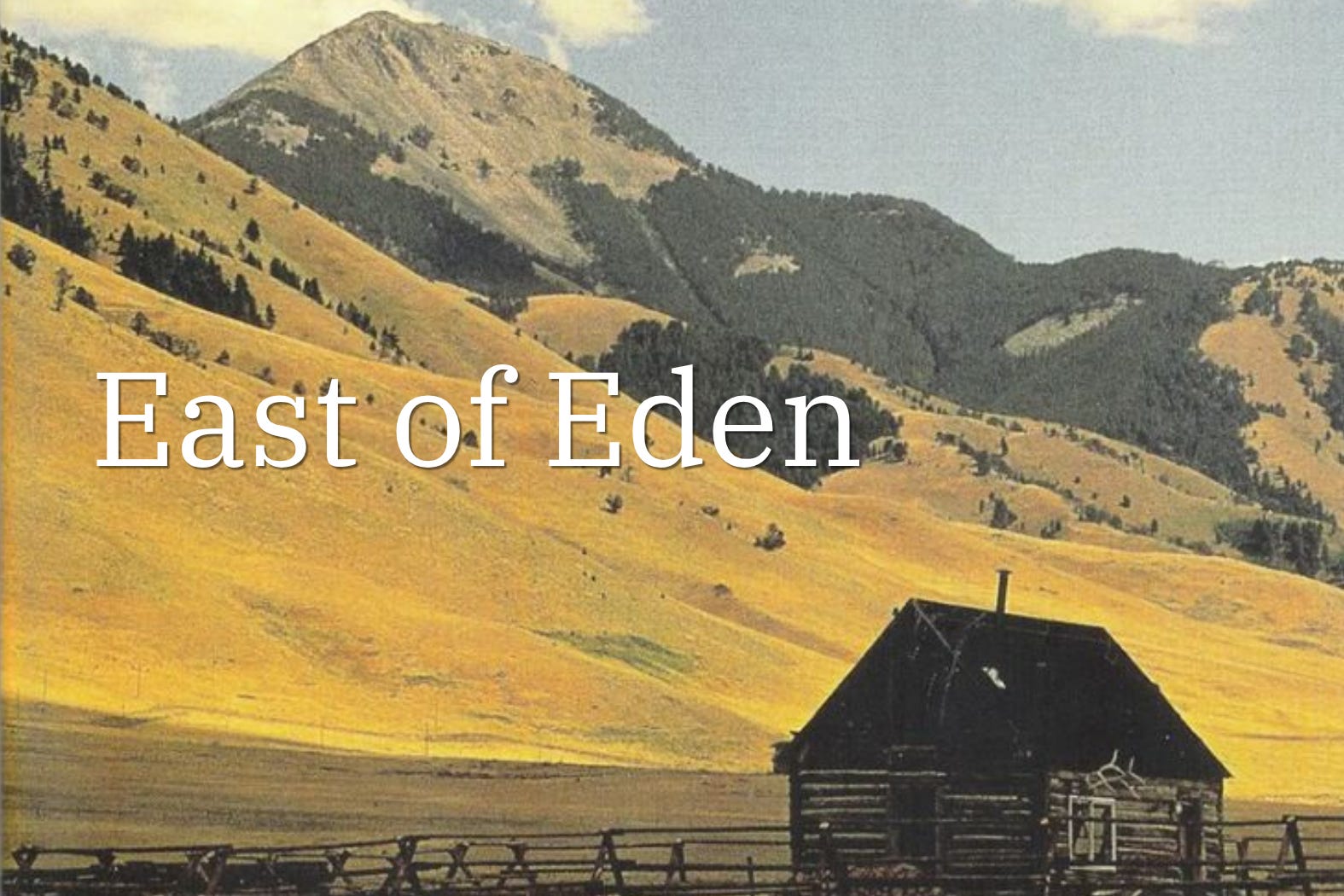
This book is not for the faint of heart. It hits on a series of themes — free will, good and evil, rejection, the desire to be loved, inherited guilt — which is why it is an American classic that many connect to. But unfortunately, because of the book's age and length, it can feel intimidating. We live busy lives. Legitimate busyness, but modern life is also filled with the white noise of social media, entertainment, and the news. The book is just over 600 pages, and it starts slow. It will require the reader to slow down and immerse themselves in a generational epic.
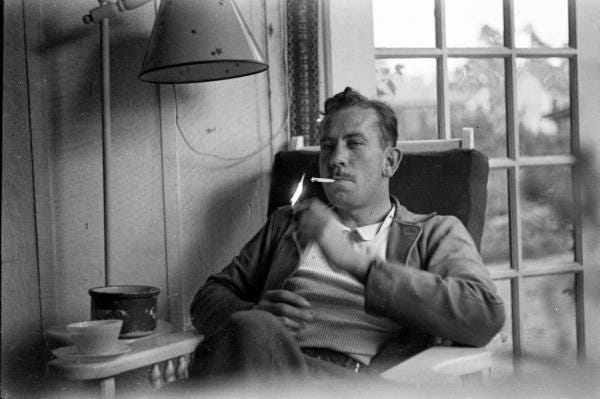
The first half of the book introduces the reader to each character in detail, and to the Salinas Valley, where John Steinbeck was born and raised. East of Eden opens on the valley with what is a clear love for it.
“The Salinas Valley is in Northern California. It is a long narrow swale between two ranges of mountains, and the Salinas River winds and twists up the center until it falls at last into Monterey Bay.”
“I remember my childhood names for grasses and secret flowers. I remember where a toad may live and what time the birds awaken in the summer -- and what trees and seasons smelled like-- how people looked and walked and smelled even. The memory of odors is very rich.”
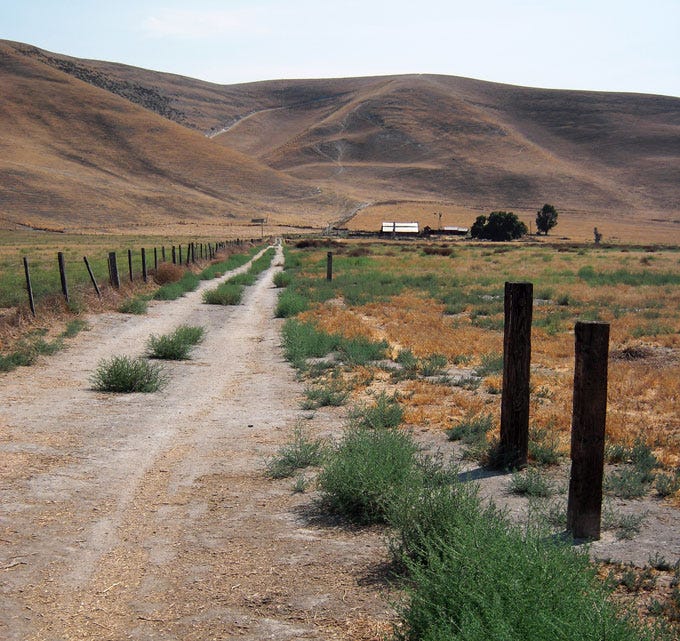
The valley floor is rich enough to grow anything, but the hills above are dry and stubborn. That is where we meet our first family, the Hamiltons, who settled in the dusty hills that won’t hold water.
The story is a generational epic, semi-autobiographical. Steinbeck braids two families. The Trasks are invention. The Hamiltons were his own. Samuel Hamilton was his grandfather. He puts himself in the book as a boy, off to the side, watching.
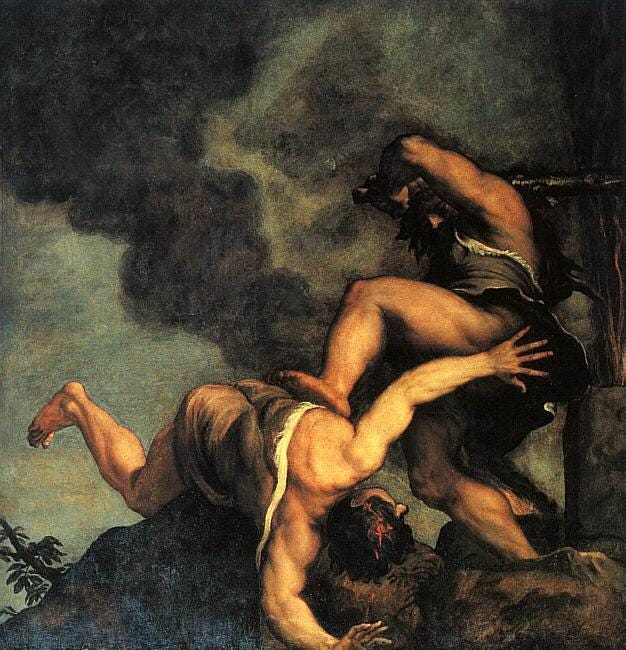
Anyone who decides to read this would benefit from reading Genesis first. Steinbeck draws much of his inspiration from Cain and Abel, and from the Garden of Eden. If you are familiar with the Bible story, you will recognize the story of one brother who brings his father a gift, only to be rejected. The other brings almost nothing, yet is treasured. The offering, the rejection, the anger that follows — is a thread that runs throughout the novel.
The Trask story is about generational curses. The belief some of us hold is that our life, how we live, and our decisions are subject to where we came from. Blood, or family, or whatever we call it. Two generations of Trasks live as though the question is already settled.
Across these two generations, brothers deal with jealousy of one another and with how to manage a relationship when a parent favors one child over the other. Adam Trask dealt with his brother Charles's jealousy while he was his father’s favorite. Then he does the same thing with his own twins, Cal and Aron.
Aron is Adam’s favorite, mainly because Aron reminds him of the boys’ mother, Cathy. But what Adam remembers is all the good that he projected onto Cathy while choosing to be blind to all of the bad.
Cathy, later Kate, is Steinbeck’s serpent in the garden. She is the deceiver who takes Eden from Adam, and what she takes from everyone else is their innocence. Steinbeck is not subtle about what she is.
“I believe there are monsters born in the world to human parents.”
She reads as flat villainy at first, but she also experiences some internal struggle that she ignores. Cathy does not think her “badness” is a choice. It’s who she is. She attempts to convince others of the same. Everyone in the story is confronted with free will, to be something other than what they were made. She is the only one who rejects it and claims others should do the same.
“As though nature concealed a trap, Cathy had from the first a face of innocence.”
Later she does appear to feel some shame for her choices. It doesn’t redeem her.
My favorite character is Lee, the Trask family cook, and also a friend, an advisor, and a father figure to the men of that house. He was born in America, he’s educated, and he speaks better English than anyone else in the book. He performs pidgin on purpose, because that’s what people expect from a Chinese man in that valley in that decade, and he drops it the moment he’s with someone who can hear him.
“Pidgin they expect, and pidgin they’ll listen to. But English from me they don’t listen to.”
Watching him decide who gets his real voice is its own underlying story. He is a servant in a house that could not run without him, and he knows it.
“I don’t know where being a servant came into disrepute. It is the refuge of a philosopher, the food of the lazy, and, properly carried out, it is a position of power, even of love.”
He sees Cathy for what she is, but he stays for Adam and then stays for the boys. When Adam takes years to recover from a traumatic event, Lee raises the boys. He is the one who tells Cal, over and over, that he is not doomed to be the thing he fears he is. Nobody asked Lee to do this. He isn’t their blood. Lee chose this family. In a book about what families hand down, the man who gives the most is the one who inherited nothing from them.
At the midpoint, Lee delivers a speech that left me sobbing. Not because of sadness, but because of its lesson about God’s love and free will. He spends years on one word from Genesis 4:7, with Chinese elders, with Hebrew scholars, over a table, for years. Thou shalt is a promise. Do thou is an order. The word is timshel. Thou mayest.
You will need to take a moment afterward.
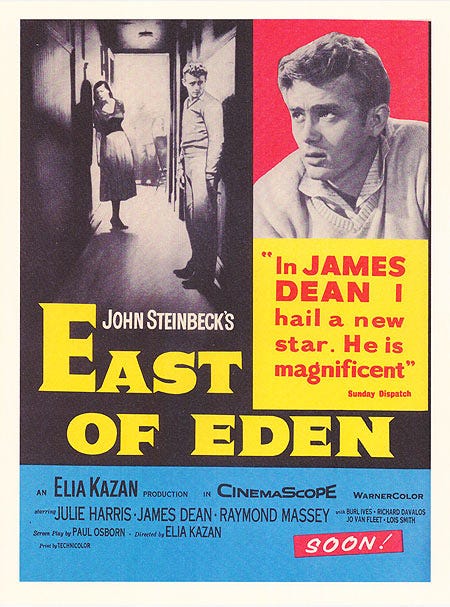
If you’re tempted to just watch the movie instead, don’t. My love for Lee is the main reason I hated the 1955 film. Lee isn’t in the film at all. With Lee gone, so is the argument at the center of the novel. The soul of this generational epic is left thin by Elia Kazan’s adaptation. If you watch it after you read the book, you’ll very likely hate it too, no matter how many awards it won.
There is a new one coming. Netflix has a seven-episode adaptation coming out this fall, written by Zoe Kazan — Elia Kazan’s granddaughter, adapting the book her grandfather cut down to ninety minutes. Florence Pugh plays Cathy, and it looks like they are attempting to frame her as a feminist “the world can keep me down” anti-hero. At least Lee is in it. That is the first thing I checked.
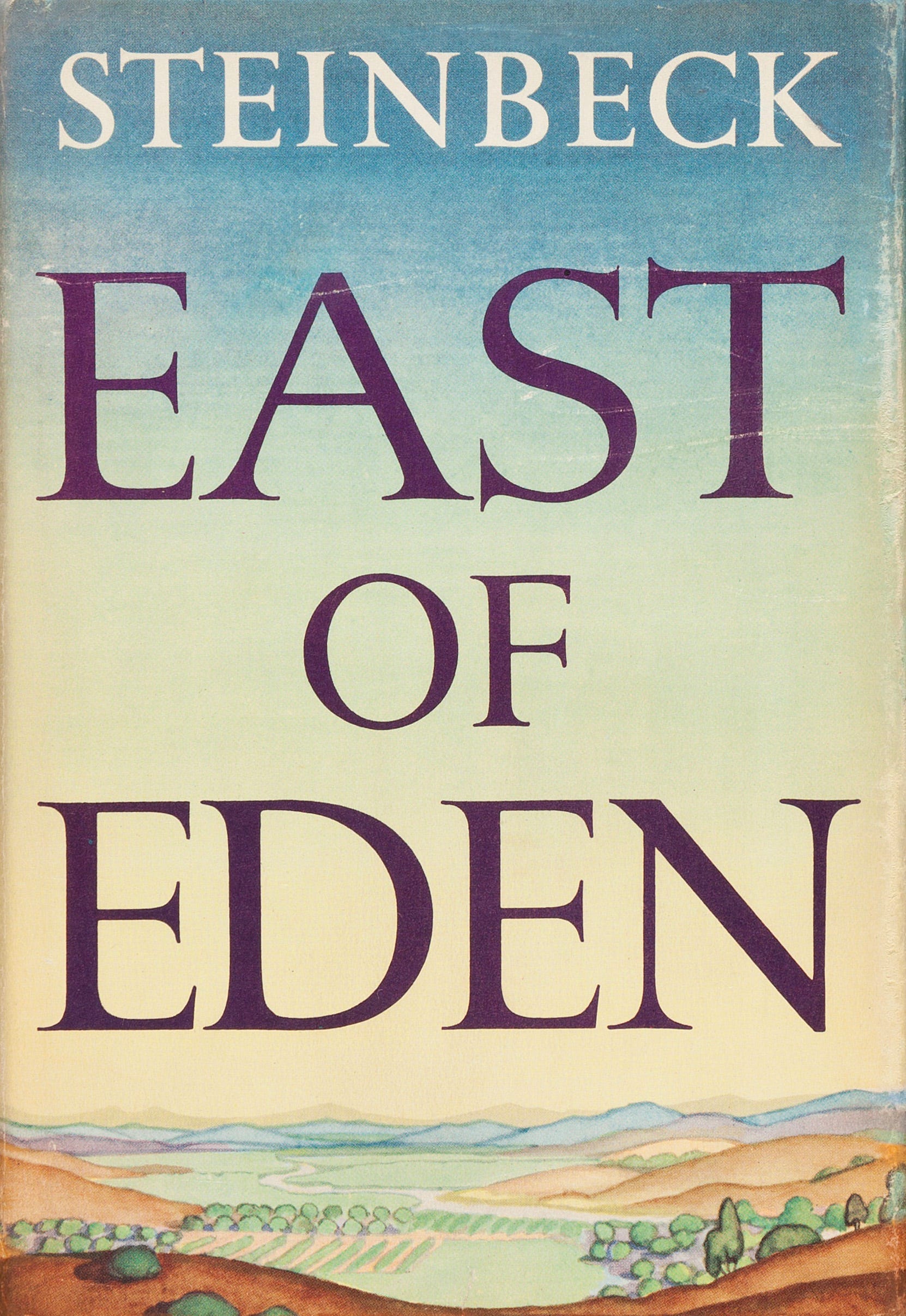
When I shared East of Eden in my IG stories, I had several comments, most centered around three.
It’s on my list.
It’s intimidating to read because of the length.
Is it worth it?
For all of these, my response is: read the book. Even if it takes a month or more and you slowly chip away at it — read the book.
This is one of the best reads I’ve had in a long time. It challenged me. It made me cry. For me right now, it made me think, taught me some lessons, and gave me hope.
Many suffer from the voice in their head or the influence of their history and convince themselves the path is set. Set because of the family you come from. Set because of what you inherit. The truth is the opposite. This story at its core is about the free will to choose who you will be. A free will given to us by God the Father. Thanks be to God that we may choose differently.
I am the one on the outside of my family. That isn’t the interesting part. There is one in most families.
For a while I was like them, and things were fine. I had accepted what I thought was my “inheritance.” But I realized I wanted different. So I chose different, and I kept choosing, and the distance grew — not anyone’s fault exactly, more the cost of the thing. Eventually it had to be said out loud. I said who I was. I asked to be taken as I am. The answer was no.
Steinbeck writes thou mayest as a door opening, and it is. He spends less time on what it costs to walk through it while the people you left are still standing there watching.
I have done nothing wrong. I still carry the guilt of being a disappointment, and I am waiting to be released from it.
Read the book.

💬 The comments on this one are for paid subscribers. Come tell me: did you read East of Eden? If you did, what stayed with you, what did you connect to? And if you haven't yet, does this make you want to pick it up? I want to hear it either way. I'll be in the comments.