

There's Probably a DSA Member on Your City Council. Here's What You Weren't Told.
Two hundred and fifty DSA members hold elected office. Ninety percent were elected after 2019. Voters are unaware about the arrangement they signed up for.

As of August 2025, more than 250 members of the Democratic Socialists of America held elected public office in the United States. Roughly ninety percent of them were elected after 2019. The list includes 96 city councilors and county commissioners, eight mayors or county executives, and significant blocs on major city councils. Seven of fifty seats in Chicago, where they formed an official Democratic Socialist Caucus. Four of twelve in Portland. Four of thirteen in Minneapolis. Four of fifteen in Los Angeles.
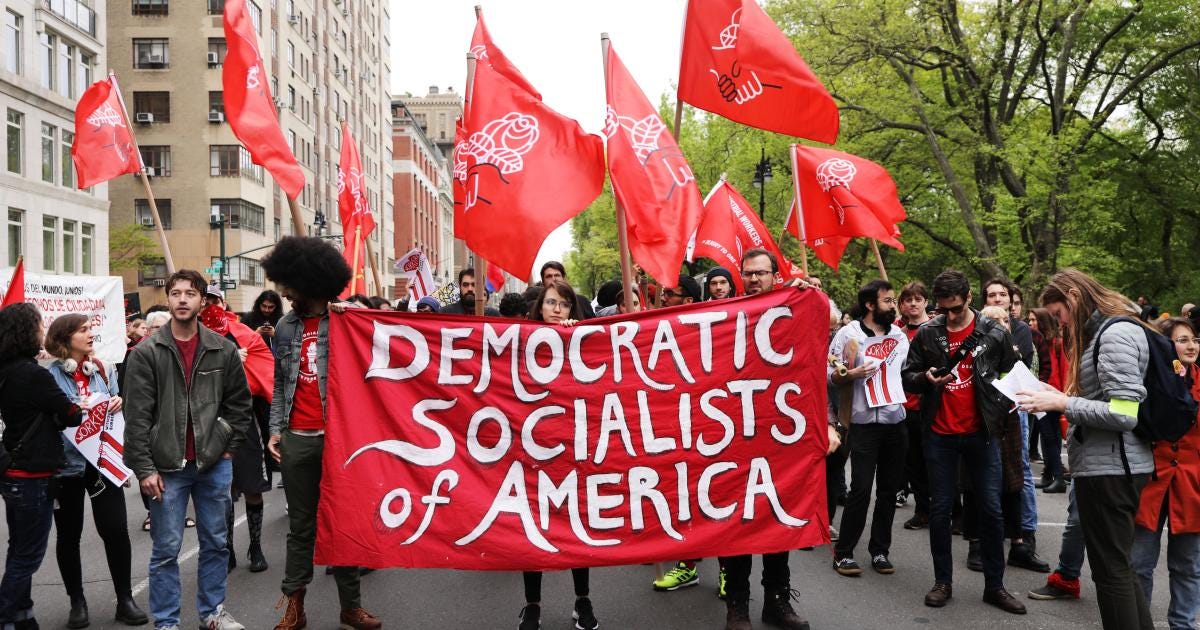
You probably know about Mamdani, who was elected Mayor of New York City. You probably know about AOC. There are exactly two DSA members of Congress, between them, and the political press has built every conversation about democratic socialism around those two faces.
The actual concentration of DSA influence isn’t in Congress. It’s on your city council. Your school board. Your county commission. The bodies that decide your zoning. Your housing policy. Your public safety budget. Your school curriculum. The places where your tax dollars get allocated at the level closest to your actual life. And the way the DSA’s elected officials operate at that level isn’t what you think. It isn’t what they told you on the campaign mailer either.
There’s a word for the arrangement they enter when they win. The word is “co-govern.” It’s their word, not mine. It’s printed in their own censure letters. It’s discussed openly in mainstream political coverage that almost nobody outside New York reads. And it changes the answer to a basic question every voter should be able to answer about every official they elect: Who is this person actually accountable to?
Most voters don’t know to ask. The reporters who could explain don’t bother. So let me explain it.
Spencer Pratt asked the question
Spencer Pratt is running for Mayor of Los Angeles. If you just rolled your eyes, that’s the reaction the political class is counting on. Reality TV guy. The Hills. Lost his house in the Palisades fire. Now he wants to be mayor. Cute.

Then the latest Ethics Commission filings came out, and Pratt had raised nearly $540,000 since January. Out-fundraising the sitting mayor in her own city. The UCLA Luskin poll puts him second, ahead of every other challenger, including Councilwoman Nithya Raman. A USC political science professor told the LA Times Pratt is now a “legitimate top-tier candidate.” Forty percent of LA voters are still undecided heading into the June 2 primary.
We did this once. In 2016, the political class watched a reality TV guy who talked like a person instead of a consultant, dismissed him because he wasn’t “serious,” and were genuinely shocked when he won the presidency. Ten years later, they’re doing the same thing in LA. They’re going to do it again somewhere else after that. The lesson never lands.

I’m bringing this up because Pratt went on Joe Rogan and asked a question about one of his opponents that almost every political reporter in America should have already been asking. He pointed at Nithya Raman, the DSA-LA councilmember now running for mayor, and said she had signed a “contract” agreeing to “co-govern” with the DSA. Where, he asked, was her allegiance: with her constituents, or with the chapter?
While Pratt got the mechanism wrong, he didn’t get the question wrong. There is no contract. But there is a real, named, published arrangement called co-governance, and DSA chapters use it openly. Voters mostly have no idea it exists, because nobody is bothering to explain it to them. The reporters who could explain it would rather dismiss a former Hills star’s electability than tell you what’s actually there.
What’s actually there: Socialists in Office
When a candidate seeks a DSA endorsement, they fill out a long questionnaire. NYC-DSA’s is 87 questions long. They sit for a candidate forum. Multiple internal endorsement votes are held, branch level first, then citywide. If endorsed, the chapter doesn’t just slap a logo on a yard sign. They effectively run the campaign. According to City & State New York, which is mainstream NY politics coverage and not a right-wing site, first-time DSA candidates “tend to rely on fellow DSA members to staff their campaigns, run as a slate with other DSA-endorsed candidates and work closely with the DSA to organize volunteer canvasses and other campaign events.”

Then, if the candidate wins, the real arrangement begins. The official becomes a “Socialist in Office,” or SIO, and joins a committee that meets regularly with the chapter to coordinate strategy on legislation, votes, and public positions.
That isn’t a contract. A contract would be visible. Signed. Legally enforceable. It would be tangible.
What’s actually there is opaque, ongoing political pressure. Voluntary on paper, with real consequences for officials who break ranks. And unlike a contract, the public can’t see the terms because there are no terms. Just an expectation, repeated in chapter materials, that you will “co-govern.”
Here’s how it works in New York City, where the DSA’s bench is deepest.
After winning, a DSA-endorsed official can join a State SIO Committee (for state lawmakers) or a City SIO Committee (for city council members). Per City & State, as of January 2026, there are eight State SIOs in New York — Senators Julia Salazar, Jabari Brisport, and Kristen Gonzalez, plus Assembly Members Emily Gallagher, Phara Souffrant Forrest, Marcela Mitaynes, Sarahana Shrestha, and Claire Valdez — and two City SIOs, Council Members Alexa Avilés and Tiffany Cabán.
The State SIO meets weekly virtually and monthly in person. The committee includes the elected officials, their staffers (who are often DSA members themselves), plus representatives from NYC-DSA’s Citywide Leadership Committee, geographic branches, and working groups focused on specific issues.
Now read this next part slowly, because this is the sentence that matters most:
“Any member — not just those in elected office — able to suggest that the committee adopt a collective position on a certain issue or piece of legislation.”
So a dues-paying DSA member in Brooklyn — not a constituent of any of these legislators, not someone who voted for them, just someone who paid their dues and showed up to a meeting — can propose how a state senator should vote on a bill. The proposal gets debated. The committee votes. The senator is one voice among many. And the expectation is that the senator will then go support whatever the chapter decided.
City & State, again hardly a hostile outlet, describes the arrangement plainly: “In some limited but very real sense, SIOs are willing to share the power they have as legislators with the DSA, agreeing to support the collective goals of the socialist organization despite their own personal beliefs.”
Despite their own personal beliefs. That is the design.
And here’s Mamdani himself, speaking at the 2023 DSA national convention as a sitting state assemblyman, giving his own theory of the case:
“We are special as DSA electeds not because of ourselves; we are special because of our organization.”
That’s the man who is now Mayor of New York City describing where his power as an elected official actually comes from. Not himself, not his constituents, the organization. He said it on stage, on the record, to a national audience of his own supporters. And to make sure the point landed, he told City & State the same thing in shorter form: “To be an unorganized socialist is a contradiction in terms.”
He’s not hiding it. The political press just doesn’t print it because it doesn’t fit the “moderate Bernie-bro social democrat” frame they’ve built for him.
Mamdani’s not a hypothetical here either. He served on the State SIO Committee throughout his time in the Assembly. According to the NYC-DSA cochair writing in Jacobin, the SIO mechanism continues into his mayoralty: “The elected officials and their staff meet with NYC-DSA leadership every week to share information, collectively choose priorities, and cohere on key votes. The primary purpose of this co-governance model is to enable an inside/outside strategy.”
Their phrase. Co-governance model. Used by the cochair of the largest DSA chapter in the country, in a flagship socialist publication, to describe how the Mayor of New York City is currently running his office.
The obvious next question is whether this applies to House members too — AOC, Tlaib, the federal-level names everyone knows. The answer is yes, with a caveat that’s more revealing than a clean yes would be.
There is a Federal Socialists in Office Committee. It functions more loosely than the State and City versions, partly because federal officials have wider constituencies and more independent fundraising bases. But it exists. And in 2024, when the national DSA was deciding whether to re-endorse AOC for her House reelection, the National Political Committee voted to endorse her conditionally, on four requirements, one of which was that she “Participates regularly in the DSA Federal Socialists in Office Committee.”
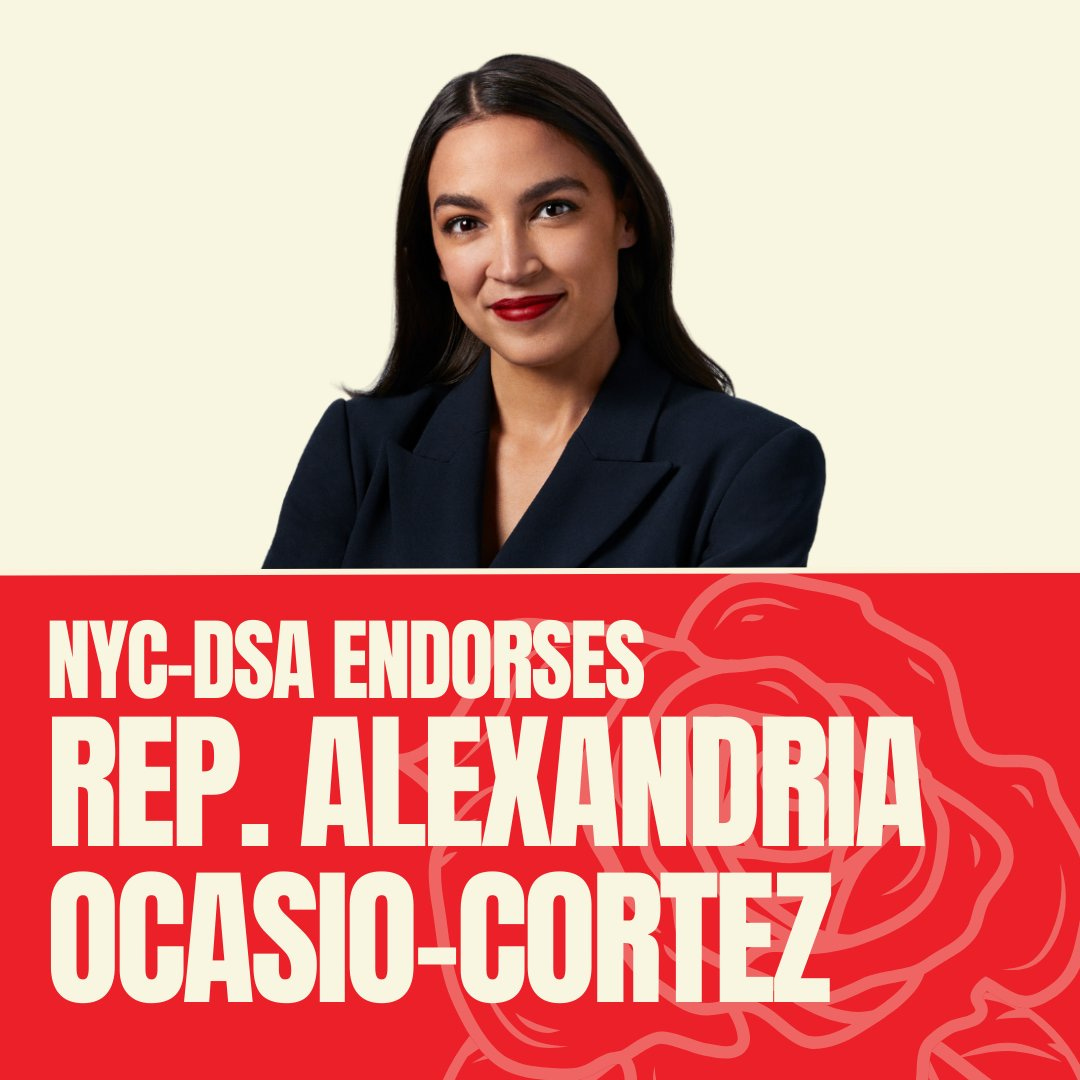
She didn’t. The national DSA pulled the endorsement. NYC-DSA kept theirs, but the national arm’s leash had a name, the leash got pulled, and AOC walked away from it. So the leash is real. They tried to use it on the most famous DSA-affiliated politician in the country. The leash also has limits at the federal level. Someone with AOC’s national profile and independent fundraising operation can survive being un-endorsed in a way a state assemblyman or city councilmember cannot.
That’s the whole leverage system in miniature. State and city officials who break ranks get censured and stay leashed because they need the chapter’s ground game. Federal officials with their own bases can resist, but only because the chapter doesn’t have enough leverage on them. The mechanism is the same. The success rate just depends on how dependent the official is on the chapter that endorsed them.
So what happens when an elected DSA official tries to act like a normal politician anyway, makes their own coalition choices, takes an endorsement the chapter doesn’t like, or votes their own conscience on something contested?
I’ll show you. It happened in Los Angeles, in public, in 2024. The chapter wrote it down.
Raman: what happens when an endorsed official tries to act normal
Raman was the first DSA-LA member elected to the LA City Council, back in 2020. By 2024, she was running for reelection. During that race, she sought and accepted an endorsement from Democrats for Israel-Los Angeles, a small liberal-Zionist Democratic club. Worth noting that this isn’t AIPAC or any major-money lobby. It’s a modest local Democratic group whose offense in DSA’s eyes was acknowledging that Israel exists.

The chapter’s reaction was a formal letter of censure, delivered February 3, 2024. The opening line is the entire piece in miniature:
“Elected officials endorsed by DSA-LA are expected to co-govern with the chapter to realize the Democratic Socialist Program (DSP), which includes a commitment to overcoming imperialist capitalism and the exploitation of working people across the world.”
Let me get this straight. A councilmember representing roughly 250,000 people in a Los Angeles district — a job that’s actually about housing, zoning, homelessness, and trash pickup — is, per her endorsing organization, expected to co-govern with that organization toward overcoming capitalism itself. That isn’t me characterizing what they want. That’s the censure letter, on chapter letterhead, signed by the 2024 DSA-LA Steering Committee.
Note also what wasn’t on the list of grievances. No complaints about her votes on housing, no complaints about her record on homelessness, no ethics issues. The trigger was associating with the wrong allies.
The vote tally is also worth your time. According to the California DSA’s own analysis, 60% of voting members approved censure, and 40% wanted to revoke her endorsement entirely. The endorsement stayed, but not out of forgiveness. As one DSA member posted on social media at the time, members “have been told not to comment or discuss Raman as this mess continued to spiral in order to preserve DSA-LA’s ‘leverage’ and ‘power’ over her.”
Their words, not mine. Leverage. Power over.
That is the system functioning exactly how they want it to. A sitting LA City Councilmember, censured in public, with internal members instructed to stay quiet so the chapter could keep its “leverage.” Meaning the threat of un-endorsement and public withdrawal of support next time around. The endorsement was always a lever, and they kept their hand on it.
The follow-up is even more revealing. In February 2026, Raman announced a run for LA Mayor, without seeking a DSA-LA endorsement. The Mar Vista Voice reports that members felt she had “treated DSA more as a political brand than as a partner in co-governance.” Same word again. Partner. Co-governance.
None of this is conjecture. It’s documented in the chapter’s own letters and in left-leaning California political coverage. The chapter expects to share governing power with its endorsed officials. When officials try to behave like normal politicians and make their own coalition decisions, the chapter punishes them in public, then quietly preserves leverage in case they come crawling back.
That’s the answer to Spencer Pratt’s question. It just took longer than thirty seconds to give.
This isn’t an LA quirk. This is the DSA’s DNA.
You could read everything above and conclude that DSA-LA is just a heavy-handed chapter. Maybe NYC-DSA is unusually disciplined because it’s the headquarters. Maybe co-governance is a regional thing.
It isn’t. The model is national, debated openly inside the organization, and increasingly the standard.
I present to you, The Socialist Majority Caucus, one of the largest internal factions and considered the moderate wing of DSA, explicitly “supports a strategy of co-governance between DSA chapters and DSA-endorsed elected officials.” If the moderates have made co-governance their official position, that should tell you where the center of gravity sits.

The harder factions want it tighter still. Caucuses like Red Star and the Marxist Unity Group push for what they call a “party surrogate” model, in which the chapter functions as the candidate’s actual political party, with discipline that resembles a parliamentary whip. One DSA-internal analysis describes Socialists in Office committees as “formalized infrastructure to discipline DSA electeds according to the democratically reached platform of the broader DSA membership.”
Even the Wikipedia entry, which is updated by DSA members and sympathetic editors, describes the shift this way: DSA “moved... away from the realignment strategy of working within the party establishment, instead adopting an electoral model focused on building its own independent capacity to run openly socialist candidates accountable to DSA’s political agenda.” Note the phrasing. Not accountable to voters. Accountable to DSA’s political agenda.
And then there’s the structural piece nobody talks about. Every DSA chapter in the country, by the national Constitution, is required to align with the National Constitution and Bylaws. The National Political Committee even produces “Model Chapter Bylaws” that local chapters have to adopt as part of their charter application. This is why when you read Twin Cities DSA’s bylaws you find them happy to work in coalition with “socialist or communist organizations under the discipline of democratic centralism.” Why East Bay DSA opens its bylaws by declaring its goal to “break the power of the ruling class and end the domination of capitalism.” Why Portland DSA’s bylaws commit to a “transition from capitalism to a truly democratic and socialist society, in which the means and resources of production are democratically and socially controlled.”
These aren’t outliers. These are chapters operating inside a centrally-defined frame. The language is similar because the parent organization wrote the model.
Here’s the part that connects this to political theory. Centralization isn’t a flaw in the DSA system that they’re trying to fix. It’s the whole project. Socialist political organization, by design, treats individual officeholders as instruments of a collective program. The chapter isn’t a PAC handing out endorsements. It’s a body that expects to share governing power with its members in office, because socialist politics, read any of their own platforms, views governance as something done by an organized class consciousness, not by individuals making personal judgment calls in a legislative chamber.
That’s not me reading hostile intent into something neutral. That’s the worldview, written into their own constitutions, bylaws, and censure letters. The fact that it makes Americans uncomfortable is a feature, not a bug, because the goal is to replace a system Americans were raised inside with a different one.
Back to your local council
Remember the numbers from the top. Two hundred fifty officeholders. Ninety percent post-2019. Most of them on city councils, school boards, and county commissions.
Mamdani gets the headlines. Raman gets the controversy. The federal-level names — two members of Congress, between them — do the work of focusing every media conversation on a manageable number of faces. Meanwhile, the actual concentration of DSA influence is local. The bodies that decide your zoning. Your school curriculum. Your public safety budget. Your housing policy.
I don’t know who’s in your local government. You probably don’t either. Most people don’t. That’s not a personal failing. Local elections are the lowest-information races in American politics, and most people can barely name their congressman.
But here’s the small ask. Open your county or city’s website. Find your council members. See if any of them appear on local DSA endorsement lists or were endorsed by your local chapter. If one of them was, that isn’t necessarily a scandal. It does mean there’s a structured ongoing relationship between that official and an organization with an explicit anti-capitalist program. That relationship almost certainly didn’t make it into the campaign mailers you got in the mail.
You’re allowed to have an opinion about that. You’re allowed to vote with that information. What you’re no longer allowed to do is say nobody told you.
Spencer Pratt gets laughed at for being a D-list former reality TV star, but on Joe Rogan, he asked the right question. Is her allegiance with her constituents, or with the chapter? Two days later, he was up to second place in the polls and out-fundraising the sitting mayor of Los Angeles. Pratt is the only one asking this question. The answer is right there in the censure letter. It’s in the City & State piece that any of them could have read in five minutes. It’s in the California DSA’s own analysis of their own electoral strategy. It’s in Mamdani’s own quote, on the record, that an unorganized socialist is a contradiction in terms.
The honest answer to Pratt's question, 'Who is this candidate accountable to?' is that she joined a structured arrangement to share governing power with a political organization whose stated program is to overcome capitalism, and she’ll be censured if she steps outside the lines. Which they have done. Twice over now.
Now go look at your city council.
This whole article was shockingly eye opening. This should be in everyone’s radar! As always, thank you for sharing!!
This is WILD! I've noticed DSA endorsements around but never dug that far into what they stood for. A mini-government inside our government as a takedown of our society is nuts.