


Reminder: For Memorial Day weekend and Kitchen Senses lunch, I am currently running a Memorial Day discount until Tuesday. 20% off an annual subscription as long as you are subscribed. Get it!
Yesteryear appears in my feed again. Fourth time today. Two social media platforms. I shouldn’t be surprised. I clicked the first video because I recognized the book name. Two weeks ago, at my women’s Bible study, one of the women asked if I had read Yesteryear. I said no, but planned to, thinking she was talking about a different book. I don’t remember which one I thought it was. I put it out of my mind until the book started following me through my feeds.
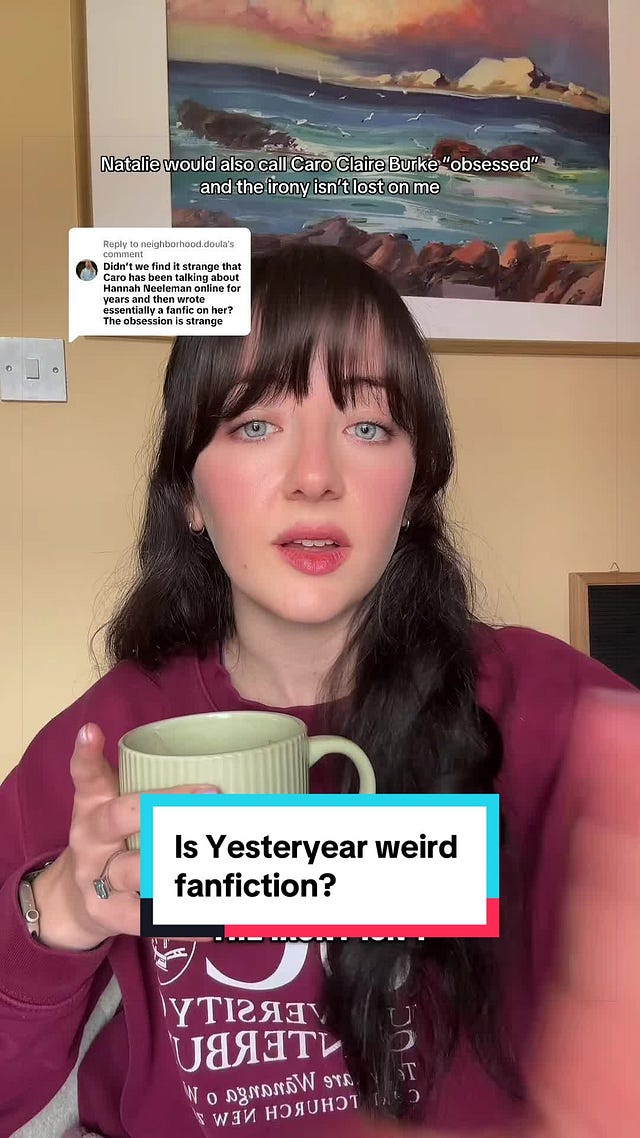
 Tiktok failed to load.
Enable 3rd party cookies or use another browser
A young woman sits in a room, holding a ceramic coffee mug, replying to a comment about the novel and enthusiastically defending the author.
“No, I do not find it weird that a woman who has been interested in and highly critical of how fundamentalist Christianity has been inherently damaging to women around the world would then go on to write a book about fundamentalist Christianity that may or may not have been inspired by some of the front-facing people promoting this movement.”
This is the book mentioned at my Bible study?
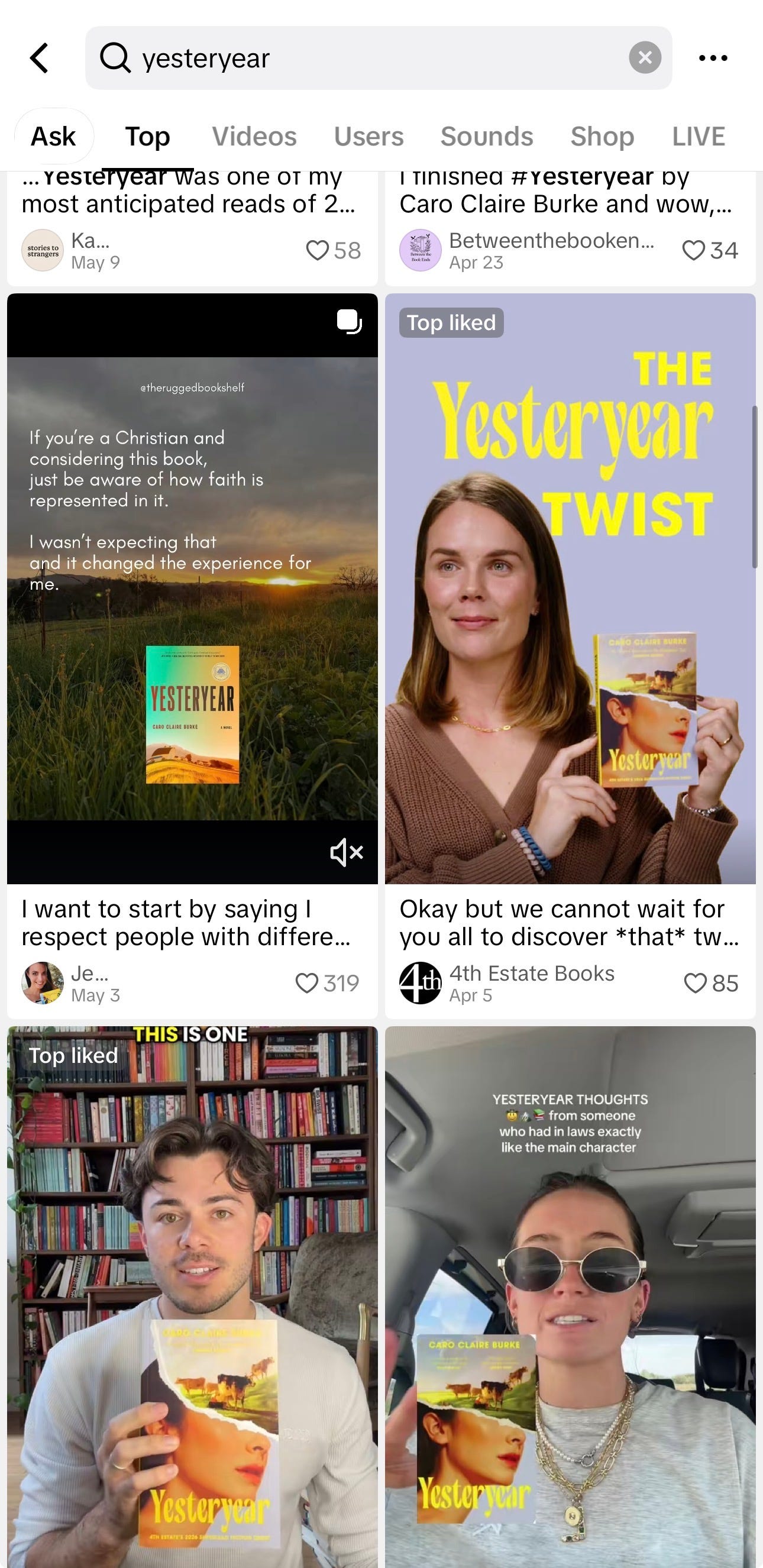
I type “Yesteryear” into the search bar. Two scrolls down, I stop at the thumbnail of who I assume is the author. A woman with mousy brown hair holds the book near her face, her body turned slightly toward the camera. The image feels familiar. I get that twinge of memory and pause, trying to grab hold of it before it slips away.
Where have I seen her before?
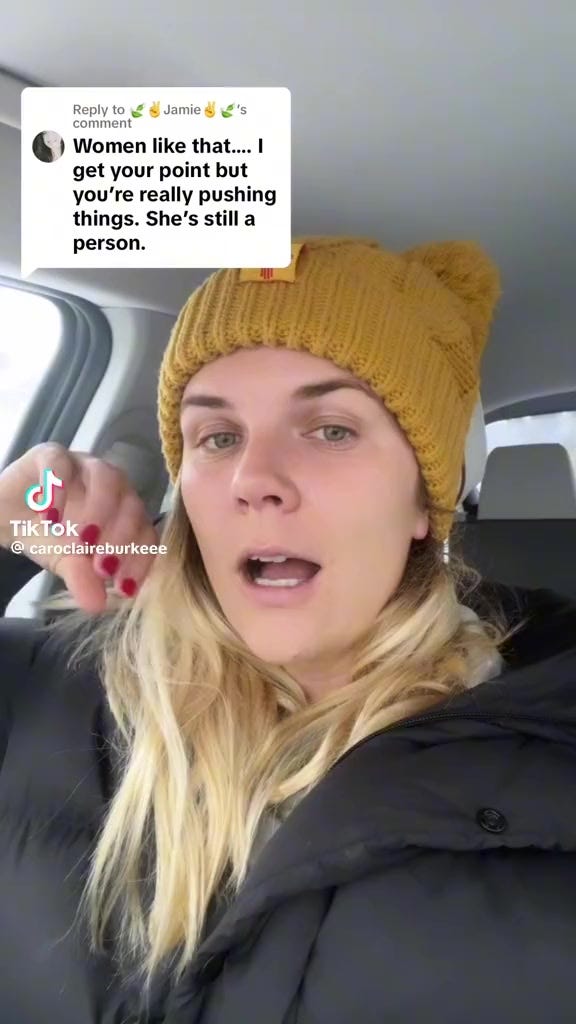
A year ago, a woman would frequently cross my feed. Sometimes she was sitting in a car, other times in a dimly lit room, speaking directly into the camera in a tone that emphasized that what she had to say was important and thought-provoking. Back then, she was blonde. The camera angle was always slightly off to the side, tilted up her nose. I stare at the thumbnail for another moment before realizing who she is. Caro Claire Burke. This could be considered our first introduction, because even though I knew her face, I did not know her name.
It all made sense now. Of course, she got a publishing deal. Her content was narrowly obsessed with “deep dives” into the “alt-right pipeline,” which translates to any content creator with traditional values sharing traditional content. When she frequented my FYP, her criticisms centered on either Ballerina Farm’s Hannah Neeleman or Jessica Kraus of House in Habit. Hannah and Jessica could not be more different, but they fed the same pipeline. You could say she had her bases covered. But I want to trace a different pipeline. The feminist commentator to published author pipeline.
It’s a pattern that’s hard to miss. A progressive creator shares her deep thoughts on social media, usually TikTok. The thoughts are never new, mostly recycled progressive criticism repackaged through the language of analysis and intellectual seriousness. Burke’s content typically centers on feminism, criticism of Christianity, and particularly women who openly embrace traditional roles — marriage, motherhood, religion — but do not frame themselves as oppressed. Oh, and I almost forgot: a sprinkle of anti-capitalism. Of course.
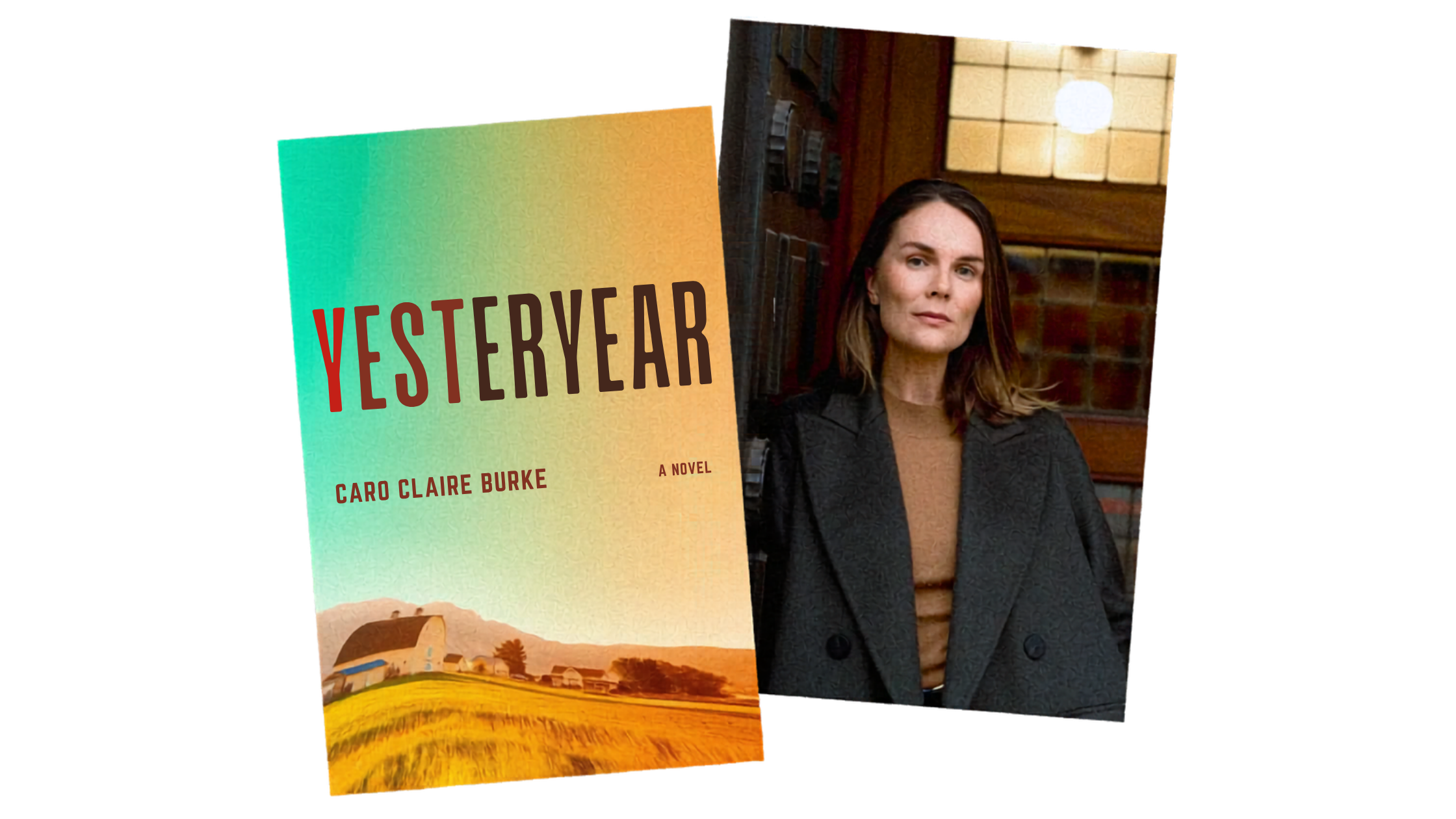
The platform grows through cultural affirmation as much as personality. She tells followers what they already believe, with little nuance, delivered as confident absolutes, dressed up as research and cultural concern. Publishing houses love this because the audience is already there, and the politics already align. Look at any “Hot and New” table at the bookstore, and it’s clear the modern literary world is not politically neutral. It rewards progressivism and treats it as moral and intellectual seriousness, particularly when it arrives wrapped in feminism, anti-traditionalism, or resistance to scary “Christian nationalism.”
A talking head like Burke is the perfect package for the modern publishing pipeline: a recognizable online following, progressive politics, an intellectual presentation style, and a book critiquing traditional values and Christianity at a time when publishing houses are deeply invested in amplifying those exact cultural anxieties. Give that girl a book deal, a Vogue feature, and a guest spot on Seth Meyers.
I haven't read the novel. So, I'm not here to review the prose or the plot — I can't. What I've read is the jacket copy, a stack of reviews, the excerpts, and, before any of that, a year of the algorithm feeding me enough of her intellectual feminist banalities. This isn’t a book review. It’s about the woman who wrote it, and the machine that handed her the deal.
Her fixation was Hannah, and from the description, it’s clear the book is a critique of Hannah and anyone like her.
Natalie lives a traditional lifestyle. Her charming farmhouse is rustic, her husband a handsome cowboy, her six children each more delightful than the last. So what if there are nannies and producers behind the scenes, her kitchen hiding industrial-grade fridges and ovens, her husband the Republican equivalent of a Kennedy? What Natalie’s followers—all 8 million of them—don’t know won’t hurt them. And The Angry Women? The privileged, Ivy League, coastal elite haters who call her an antifeminist iconoclast? They’re sick with jealousy. Because Natalie isn’t simply living the good life, she’s living the ideal—and just so happens to be building an empire from it.
Until one morning she wakes up in a life that isn’t hers. Her home, her husband, her children—they’re all familiar, but something’s off. Her kitchen is warmed by a sputtering fire rather than electricity, her children are dirty and strange, and her soft-handed husband is suddenly a competent farmer. Just yesterday Natalie was curating photos of homemade jam for her Instagram, and now she’s expected to haul firewood and handwash clothes until her fingers bleed. Has she become the unwitting star of a brutal reality show? Could it really be time travel? Is she being tested by God? By Satan? When Natalie suffers a brutal injury in the woods, she realizes two things: This is not her beautiful life, and she must escape by any means possible.
A gripping, electrifying novel that is as darkly funny as it is frightening, Yesteryear is a gimlet-eyed look at tradition, fame, faith, and the grand performance of womanhood.
Burke’s platform runs on feminist values and a running critique of any woman who doesn’t share them. She launched her podcast, Diabolical Lies, with co-host Katie Gatti Tassin of Money with Katie — named, of all things, after Harrison Butker’s commencement speech at Benedictine College, the one where he told the female graduates to go home and become homemakers. The brand keeps growing. She built it on the speech she hates.
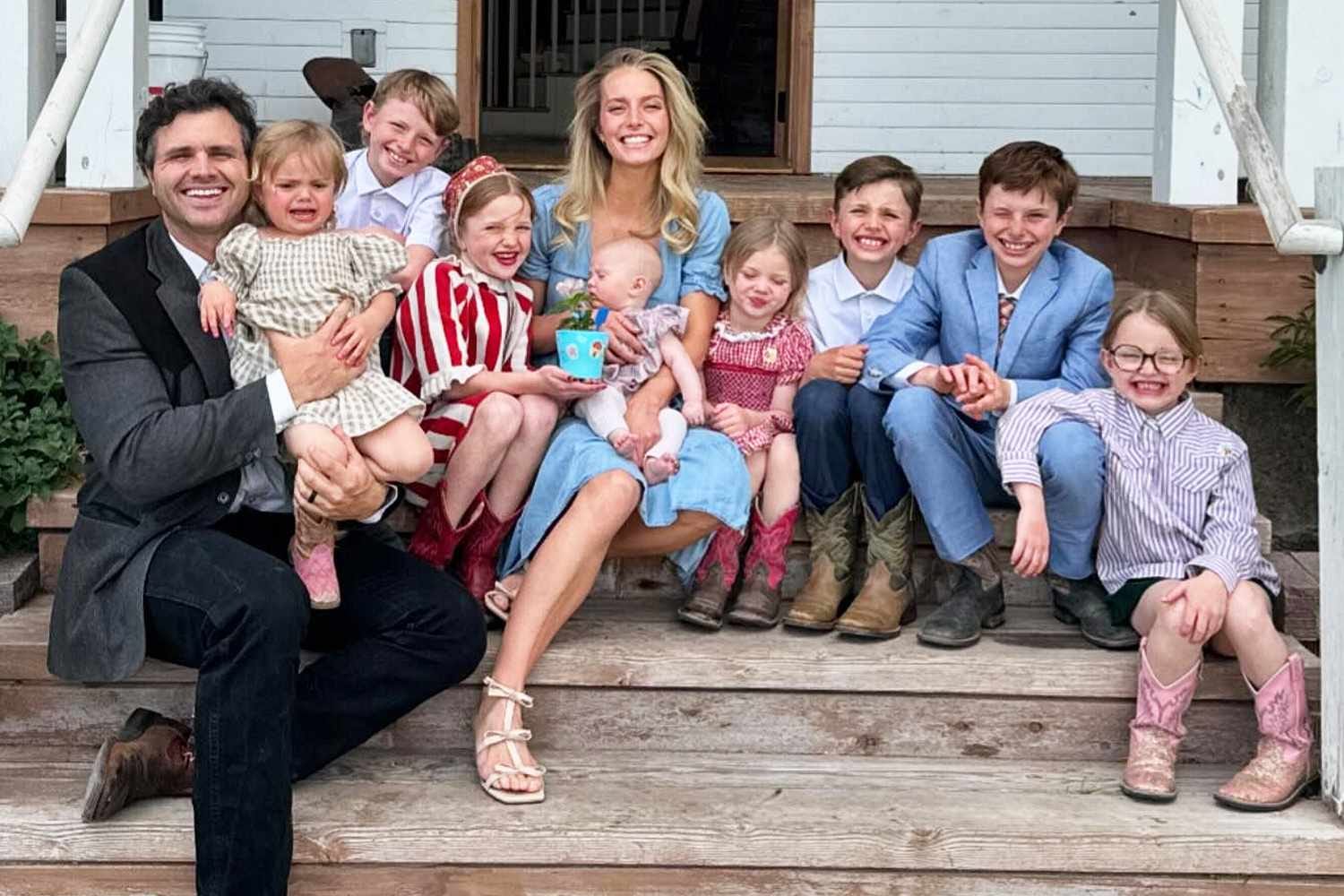
Much of her commentary fixates on the raw milk, the egg apron, the sourdough, the gaggle of children. But her beef with Hannah Neeleman isn’t really about any of that. Hannah is a symbol of audacity. The audacity of a woman to choose a life that is anything other than the one Burke would choose. Any choice made against her worldview is dangerous, perpetuates female oppression. Worse, women like Hannah make that oppression look like a fulfilling life. That’s the part that gets her.
Anyone with a presence online is curating an image. Even if you show up in a bathrobe and a messy bun, you are curating an image. Burke warns women that Hannah’s life is not real, that it is curated. But she does the same as anyone marketing themselves online. Curating intellectual seriousness, “digging deep” into the truth.
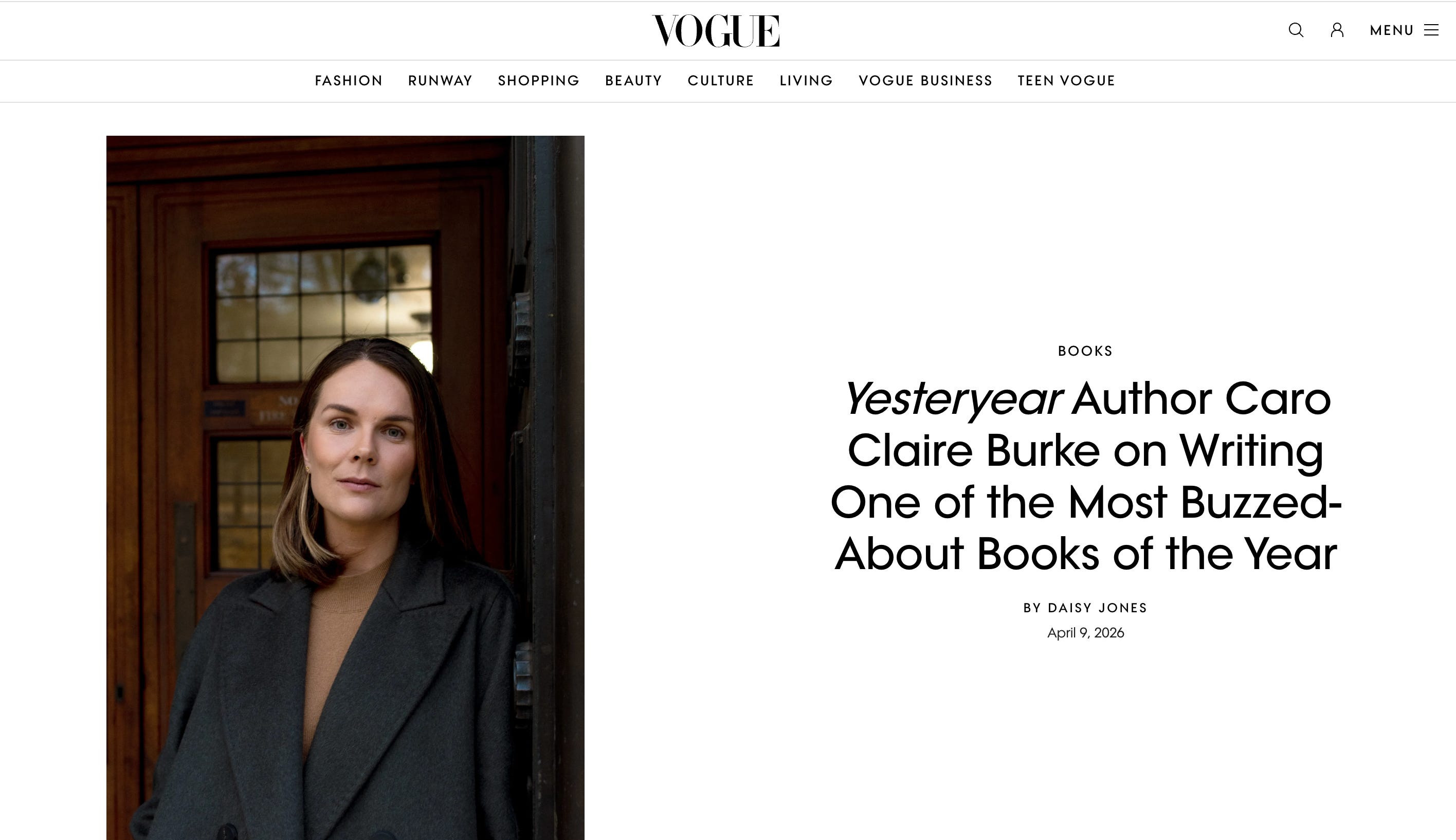
Except Burke doesn’t dig deep. She confirms. Asked by Vogue how she found Natalie’s inner narrative, what she said exposed herself:
I did a lot of internet lurking of women who are in these fundamentalist communities. I also got to interview some women for my job, and talk to them about Mormonism and these Christian religions, and what it feels like to be a woman.
I am not from [that background], but so much of it is relatable to all women—it’s just that the dial is turned up to 11. So once I had locked into that worldview, it was pretty easy to create Natalie.
She researched exactly enough to verify what she already believed, cranked it to an 11, and called it done. Natalie isn’t a person. She’s a verdict.
The rest of the research tells the same story. On Seth Meyers, she explained the influencer boot camps she paid into, all on Zoom, expensive enough that she joked needing the book to sell or she’d be in the hole. Then, with a shrug: “It’s a pyramid scheme. So I was at the bottom of the pyramid.” She and Meyers had a laugh, because of course it’s a pyramid scheme, as if that’s just what tradwives do.
The scoff about the pyramid scheme is because it’s synonymous with dishonesty. The point. Hannah and any woman online representing traditional values is a con, fleecing the women who follow them. Burke went looking for the con, sat inside an actual one on Zoom, and spent money to confirm what she already believed. The whole book is an accusation. Except Hannah sells beef. It’s almost as if, to Burke, selling anything to anyone is the con. As if entrepreneurship, the cart on the website, the woman making money from her own life, is the pyramid.
The pyramid scheme is the oldest hustle on the internet; the make-money-from-home funnel started in the mail, door-to-door. It ran long before “tradwife” was a word. Amway. LuLaRoe. The essential oils your neighbor wouldn’t stop texting you about. The supplement guy. The sales-bro selling a “mentorship program.” Burke didn’t find something rotten at the heart of trad culture. She found influencer culture. A grift that’s everywhere, run by everyone, aimed at anyone. But she used it to villainize traditional women.
The book only sells if Hannah is secretly cosplaying the 1800s, if the farm and the babies and the sourdough are a performance she’d abandon the second the Wi-Fi died. Just like Natalie. Drop her into 1855, let her bleed, haul firewood, and break. That is when the fraud reveals herself. But Hannah Neeleman isn’t living in 1855. She’s a thoroughly modern woman who happens to have a farm. She runs a business with her husband, films it on an iPhone, and ships the product. The whole point is that 2026 is what makes her life possible. The automated dairy barn, refrigeration, the camera, the cart on the website. We all know this. But that doesn’t benefit Burke, because a woman who freely chose this and is genuinely happy blows up her income stream. Strips her of her prestige. So Hannah, like Natalie, has to be miserable, or secretly miserable, or about-to-be-miserable. She’s a conduit for the one thing Burke needs to be true: that no woman could choose this life and mean it. That if you scratch the happy tradwife hard enough, you’ll find a prisoner. Natalie is the scratch.
Feminism has sold women for fifty years that you could have it all. The career, the marriage, the kids, the empire. Hannah Neeleman went and did it. Eight kids, a working ranch, a brand, a business she runs with her husband, millions of people watching. That’s her dream, fully realized. No pyramid scheme in sight. The catch is she built it on a worldview Burke finds morally reprehensible, so it has to be dissected into a grotesque, bloody corpse.
Burke will never admit she is Hannah; in part, she is the same from the other end of the spectrum. UVA, an MFA from Bennington, a media job at Katie Couric’s company. The kind of pedigree that gets you taken seriously. Her life is also aspirational. To some, at least. A book, a Vogue feature, a movie option, a baby on the way, a move to New York. There are women snapping “queen” in her comments who want exactly that: write the book, get the deal, do it all while married with a kid. Same as the women who watch Hannah make sourdough bread while holding a baby. Both lives took work, drive, a husband who’s on board, a dream worth chasing. Burke just doesn’t like Hannah’s dream.
Let’s not forget the money. Both women are reaching for success. The difference is that Hannah’s whole origin story is unapologetically capitalist—there’s a shopping cart on the website, sell the cookies, sell the apron, sell the beef—and Burke views this as a con. Her own money is fine, of course. Hers is a byproduct of being right. A reward for the harder, more honorable work of holding the correct worldview. The check just shows up because she earned it the good way. It’s okay when she does it because she’s fighting the patriarchy.
Give me a break.
Burke spent years in her car arguing that Hannah’s followers were too dim to see the brand for what it is. But nobody’s fooled. The followers know it’s a brand. That’s the appeal. The sourdough starter and the grass-fed steaks are two taps away in the cart. Duh, it’s a product. Hannah is selling something, and the millions watching understand that completely. It’s aspirational. Its content. They know exactly what it is. So Burke has to invent a victim who doesn’t exist: the gullible woman with traditional values who thinks it’s all real, who’s being sold a bill of goods and is too foolish to notice. She needs that woman. Without her, there’s nothing for her to monetize.
Burke is pregnant now. Congratulations, genuinely. She’s also moving to New York. I’ll be curious whether the woman who built a brand on exposing Hannah’s hidden help will be doing the cooking, the cleaning, and the 3 a.m. feedings herself, or whether there will be a nanny somewhere off-frame while she’s advising Annie on set. There usually is. If you’ve got the means, why not? It’s not a crime. It’s just the thing she judges other women for doing.
I keep coming back to the bookstore. A few weeks ago, a new indie shop opened near me, and I went in expecting to like it. I didn’t. Every cover was the same. The flat illustrated people, the lowercase titles, the modern lit, the “spicy” romance, and the fantasy with the sprayed edges, all of it arranged on tables at the front like a feed you could walk through. And there was Yesteryear, on the “Hot and New” table.
I almost missed the classics. They were on a short bookcase, lower than the rest, pushed against the back wall, facing away from the door.
I don't know if the woman from Bible study ever read it. I hope she did. I hope she saw exactly what it thinks of her — and bought the sourdough starter anyway.
I confess I’ve never paid much attention to Ballerina Farm but I’m old enough to remember Pioneer Woman. And in the early days of blogs and the internet she really did seem like a woman who had it all. Wannabe career woman who meets a cowboy and winds up on a ranch, has a gaggle of kids, homeschools them and photographs it all for no less than THREE websites? At one point she had a cooking blog, a homeschool blog and her main blog. I confess I was naive enough to think she was doing this all herself and wondered how she had enough hours in the day to cook and homeschool and go on a cattle drive and take pictures of all of it and then write three blog posts. I actually felt so inadequate when I compared my life to hers. It was only later when she mentioned some assistant that I had a light bulb moment and realized she had all sorts of help and that she was marketing herself and her brand and this had all been calculated. (Of course she wound up famous and had a cooking show and brand deals and all the things). At least with ballerina farm, they are selling the beef and the protein powder and whatever else they sell and you KNOW there are people working for them to get it all done. I can’t imagine reading Yesteryear because I have zero interest in a feminist take on tradwives, however I do think women everywhere need to remember that the internet isn’t reality and the curated glimpse someone gives you into their lives are just the highlights. And it can be frustrating to realize that the people you idolize are marketing themselves to you, or hiding the reality of how three blogs are managed. There’s a larger discussion that women need to have about real vs fake, the competition to make people think our lives are perfect, and also the idea that somehow women need to push themselves hard enough to have it ALL.
🔥🔥🔥 Yes! This! Thank you for putting my disorganized thoughts into words.