


Notes on a novel I didn't enjoy and can’t stop thinking about.
🚨 WARNING: Light Spoilers Ahead
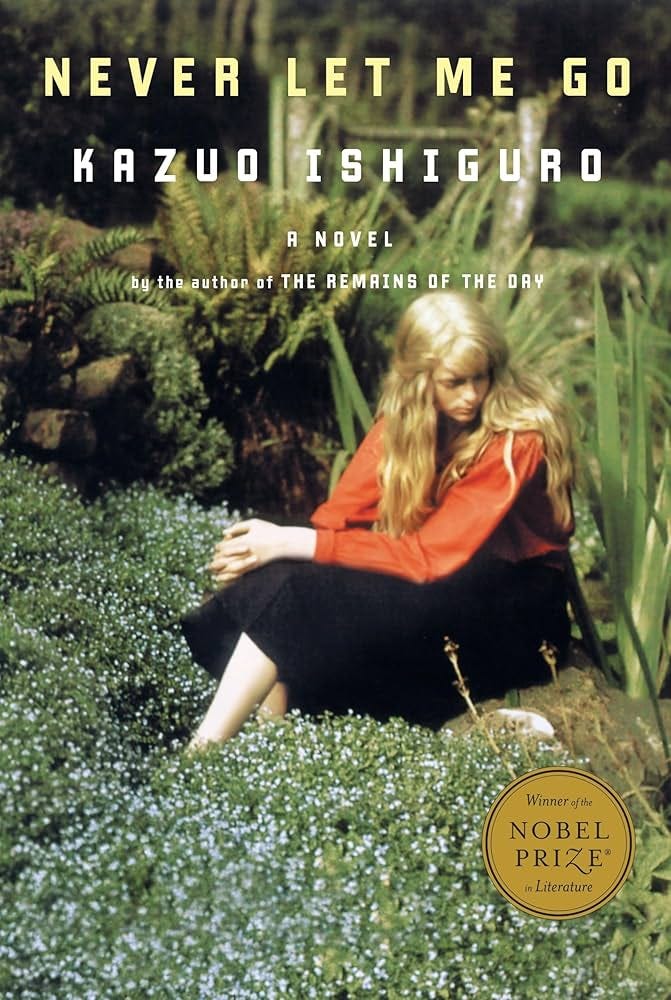
Never Let Me Go is called dystopian sci-fi. It isn’t, not really. Kazuo Ishiguro uses the genre—the off-kilter institution, the slow drip of revelation—to ask something harder than what dystopia usually asks. Not how do people resist a system that owns them? But what conditions produce a person who doesn’t?
When I posted about the book, the few people who responded either hated it or wondered if they had missed something. I get the reaction. If I’d come to it differently, I might have landed there, too. Normally, I don’t spoil a book. This one is the exception. Going in blind, I think most people will end up frustrated or confused. I knew the basic plot and roughly how it ended before I started, and that shaped how I read it.
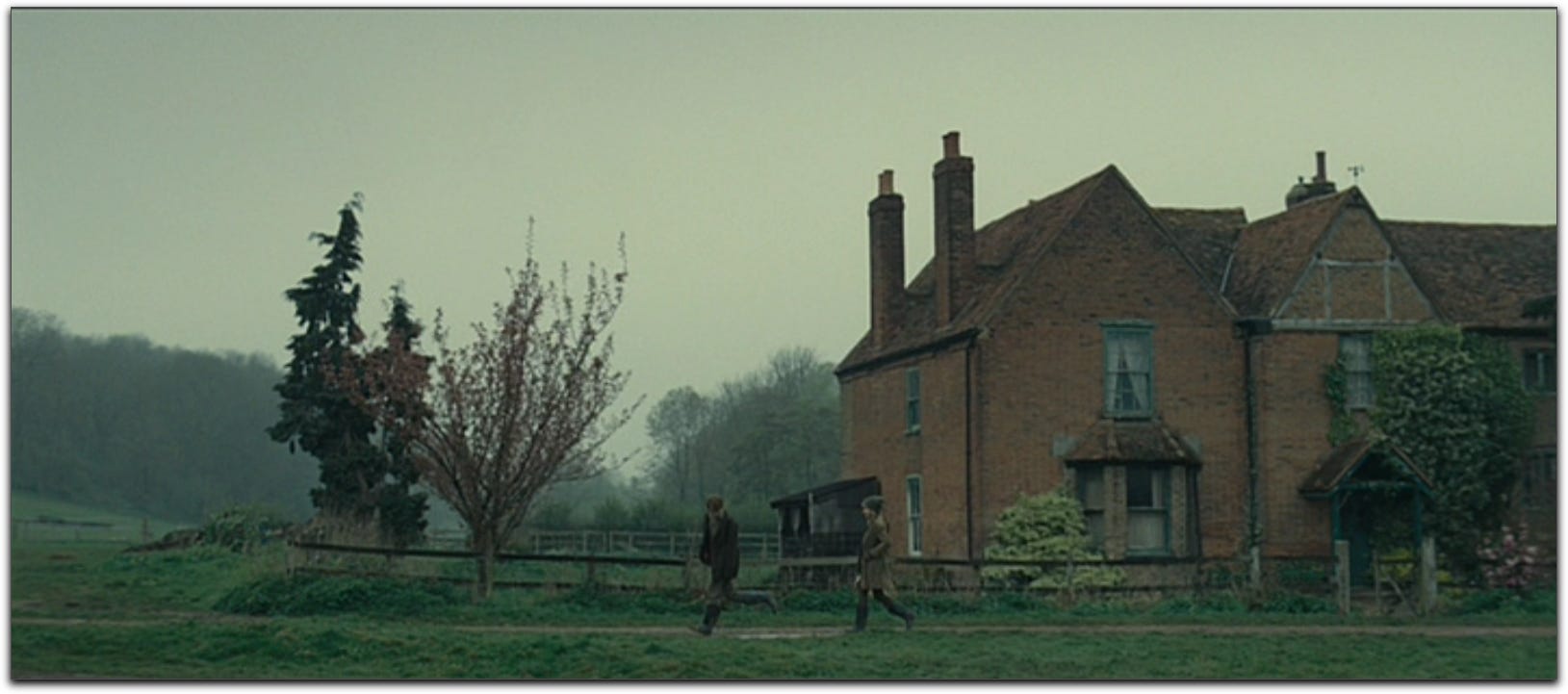
The story opens in an English boarding school where small things feel off. Required weekly medicals. Constant warnings not to injure themselves. Creativity is emphasized to an unusual degree. The children’s art becomes a kind of currency. A French-Belgian woman called Madame evaluates the children’s art and selects pieces for what the students call “the gallery.”
The story centers on three friends: Kathy, our narrator; Tommy; and Ruth. There’s a love triangle, but it’s not the center of the book. The children are clones raised to become organ donors. Kathy works for years as a “carer,” looking after donors as they progress through their donations—before becoming a donor herself.
The language is flat. The children don’t give up organs; they make “donations.” They don’t die; they “complete.” The clones aren’t for specific recipients. The children question if they are cloned from someone real, a “possible.” Ruth hears that hers was spotted working in a fancy office in Norfolk. A group of them goes to find her. It isn’t her.
Every child wants to know where they come from. These characters are no different. But for Ruth, this confirms the worst fear. That they aren't copied from anyone admirable. They're likely cloned from criminals, addicts, and the discarded, spare parts assembled from spare people.
The book is told as a memory. It’s incomplete, the way memory is. Kathy remembers some things sharply and shrugs at others. She asked a question once, accepted whatever answer she got, and moved on. The whole novel sits in that slight fog. And it has another quality, harder to pin down: the children have been raised so thoroughly to accept their fate that even the questioning that does happen stays small. Internal. Private. There is no uprising. They don’t organize.
Ishiguro explores this question through love and creativity. The students were told the art mattered, though they didn’t know why. Tommy, who couldn't make art, got teased for it and lectured by teachers. Then one of them, Miss Lucy, told him it was fine. He didn't need to be creative. He should just be himself.
On a first read, it sounds like kindness. It isn’t. Miss Lucy accepts the purpose of the children. Telling Tommy his art doesn't matter is another way of telling him that nothing he does will change what happens to him, delivered as comfort.
Miss Lucy eventually breaks. She starts telling the children the truth, believing that they need to understand what’s coming, not be sheltered from it. The other guardians push back. She’s removed.
But notice what Miss Lucy doesn’t do. She doesn’t tell them to run. She doesn’t tell them to refuse. She tells them to accept it knowingly, which is still acceptance. She thinks she’s doing right by them, but her rebellion is about how the children meet their fate, not whether they meet it. Even her rebellion serves the system. Miss Lucy gives the children just enough truth to make their compliance feel like understanding rather than ignorance.
On a first read, it sounds like kindness. It isn't. Miss Lucy accepts the purpose of the children. Telling Tommy his art doesn't matter is another way of telling him that nothing he does will change what happens to him, delivered as comfort.
The school is unusual within the system. When Kathy, Tommy, and Ruth meet other donors after graduating, people want to hear about Hailsham. They ask questions. They don’t talk about where they grew up. The implication sits in what they don’t say: most of these children were raised somewhere much worse. What looked like a strange, sheltered, slightly ominous boarding school was, by the standards of this world, the kind version.
I picked this book up because comfort as a tool of control is a theme I’ve been exploring. This book takes that idea to its end. Asking what it takes to strip a person of their essence. In what conditions would a human being walk willingly to their own end? Whether clones have souls is the question this world cannot afford to answer. If they do, the donations are murder. So the question is never asked. The clones stay soulless because they have to be. Because the truth is unbearable to the people whose lives depend on them.
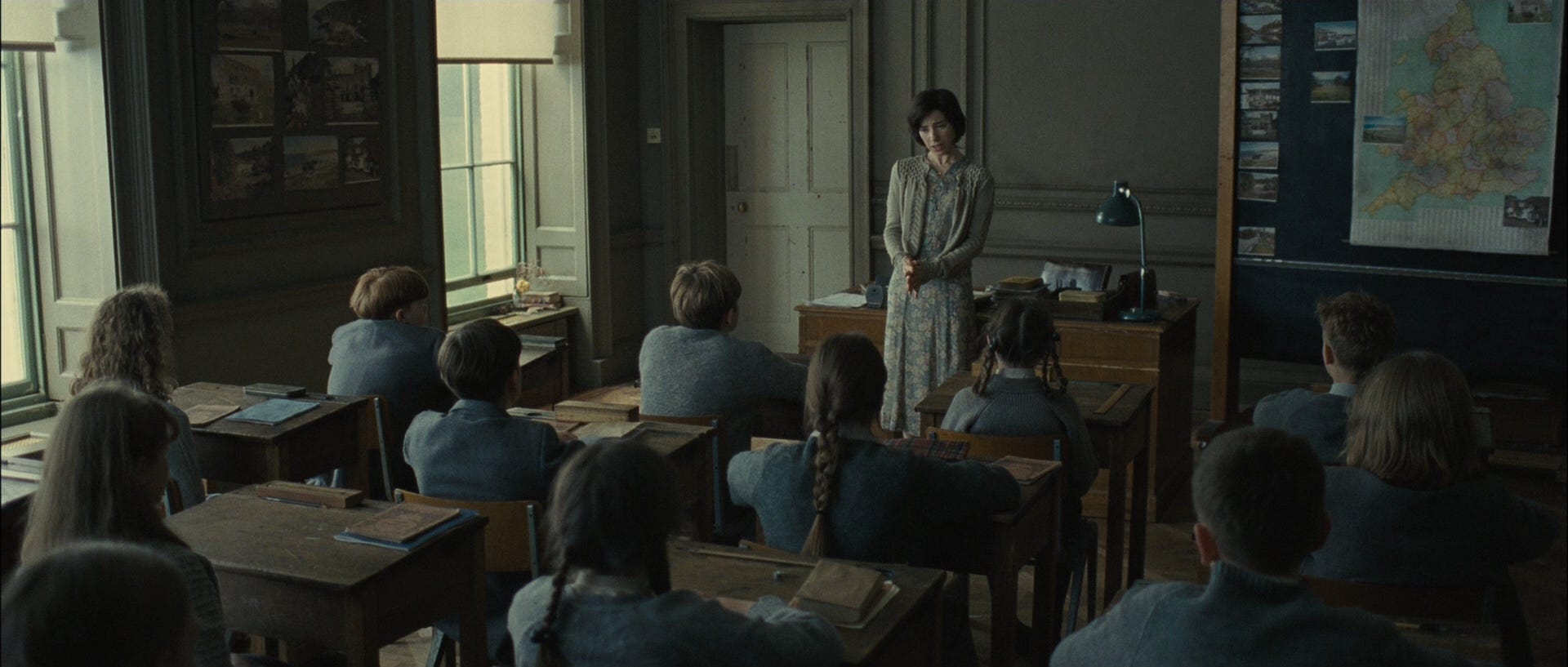
The children are never taught to question authority, to think of themselves as individuals, or to follow an instinct. Even Miss Lucy tells them to accept their fate, never to challenge it. She is accepting the sacrifice of these children for the benefit of others, of “real people.” The instincts that the rest of us cultivate—ask questions, be different, push back—are absent here by design.
So the question becomes: is the compliance the product of how they were raised or of what they are? When a person is a copy, does something essential become diluted? The book doesn't answer. It doesn't need to. It just shows you children with small private conflicts and no fight against the system that owns them. They’re told they have a purpose. They’re given no skills for any life outside that purpose. And so they do as they’re told. The donations are what their lives are for, and, eventually, they are what give their lives shape.
Even Kathy carries a quiet pride in being a good carer, her donors don’t get too agitated; they don’t struggle the way she’s seen others struggle. As her time as a carer ends, she’s almost looking forward to begin her own donations.
The other major thread is whether love can save them, or at least buy them time. A rumor circulates that couples who can prove they're truly in love can defer their donations. Tommy and Kathy chase that hope. They get an answer. It isn't the one they want. They all complete. Some on the first donation, some after four. Nobody runs, there is no breakout, no wheelchairs rolling through the gates. Everybody donates. Everybody completes.
That's the source of most of the frustration with this book. Why didn't they fight? Why didn't they refuse the first appointment? Wrong question. It's the question the book wants you to sit with, not answer. This isn't a thriller about clones escaping their fate. It's about how escape never crosses their mind.
This book is a thinker. Slow and introspective, with no big reveal. If you go in expecting dystopian sci-fi, you'll be disappointed. If you go in expecting a meditation on what makes a person a person—and what can be done to a person to make them stop asking—you'll get a lot from it.
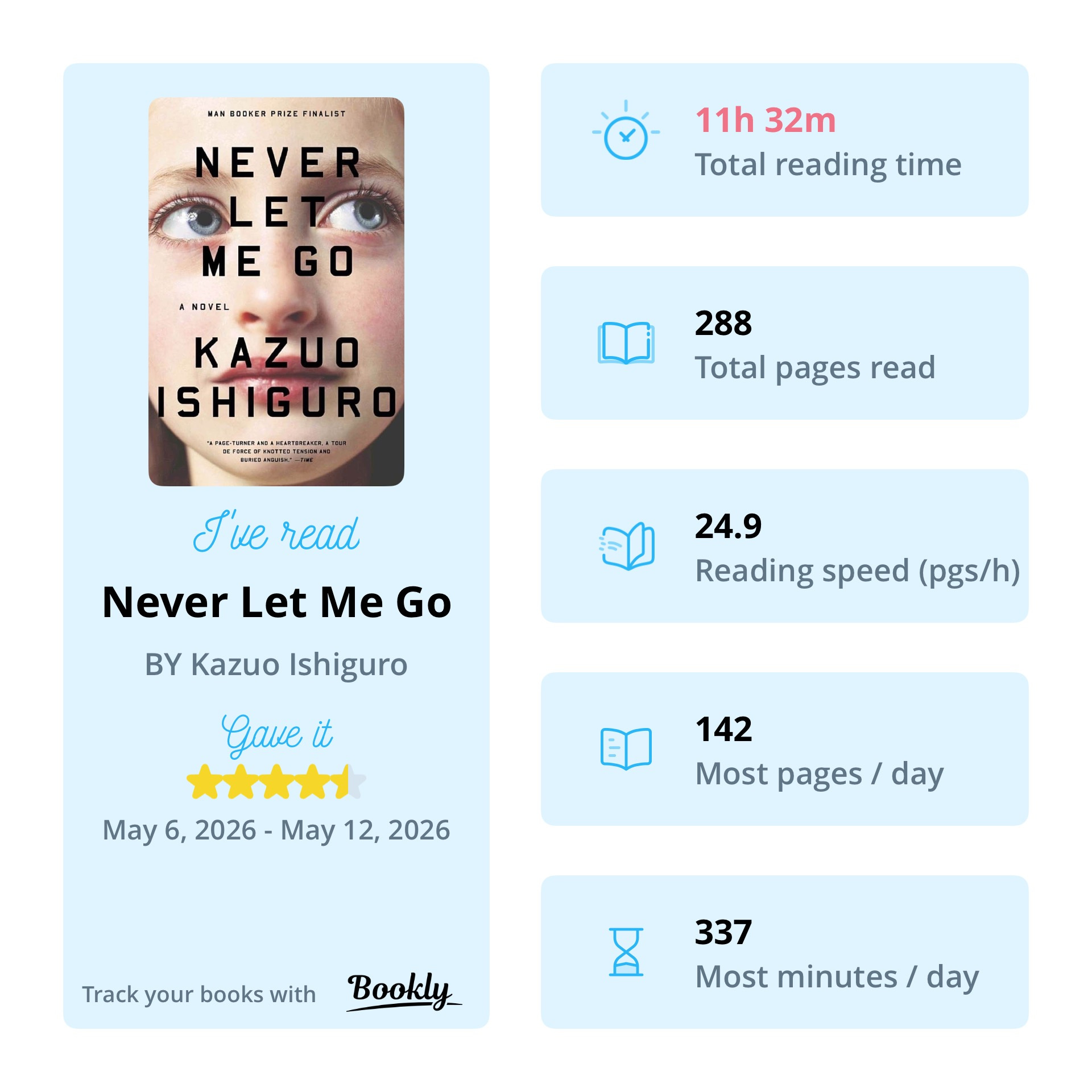
Have you read Never Let Me Go? Did you hate it? Did I convince you to reread it?
Up next: My Summer Reading List
Lovely review. You really get at the important parts of the book. It gives me a good angle to start my read (at some point). Kazuo is probably one of my favorite authors. His books are always so wonderfully introspective. Remains of the Day is excellent.
Love the review. As someone who has a hard time grasping things that are plainly laid out when it comes to literature, this gives me explanation lol!