


During Sunday service, our pastor took a moment to acknowledge the families who had lost a beloved service member. He asked the families to stand while we applauded, a demonstration of our gratitude. My mind wandered for a moment as I looked around at the standing families. I realized I did not know the origins of Memorial Day.
Sadly, for many, it has been relegated to summer cookouts and people online wishing “Happy Memorial Day.” I have always found it morbid to wish happiness on a day of remembrance. But if your only reference is pools and cookouts, it is a happy day. I had always assumed it came out of WWII, likely because we are all guilty of seeing the world through the lens of our own experience. It’s the same reason some wish you a “Happy Memorial Day.” Why wouldn’t you, if every Memorial Day in your life marked the start of summer and not the death of a loved one in war?
Memorial Day originated in the aftermath of the Civil War. After four years of fighting, the bloodiest war in American history, 620,000 soldiers were dead. A war that almost split the country in two and put neighbors and family against one another.
In 1865, in Charleston, freed slaves dug up a mass grave.
Union prisoners had died at a Confederate camp on the old planters’ racetrack and been dumped in a heap. The Black residents of the city exhumed them, reburied them one by one, built a fence around the ground, and came back on the first of May to lay flowers. They called it Decoration Day. Thousands came: schoolchildren with bouquets, Black Union regiments marching, ministers reading scripture over the graves.
Historians still argue over which town gets to call itself the birthplace of Memorial Day. The official version credits an 1868 order from a Union general and a ceremony at Arlington; a couple of other towns make their own claims. Charleston came three years before the general did. Regardless of which city it began in, the purpose was remembrance, thanks, and healing.
It’s been 161 years since that day in Charleston, and we are on the cusp of America’s 250th anniversary. With time, history that isn’t cared for can lose its meaning. It can be rewritten. Forgotten.
Today, the Civil War is told simply through a lens of good and evil. But division within a nation, among its own people, is never that simple. We know this all too well. For many of us, it feels like we have been in the midst of a civil war with our family, friends, and neighbors for close to a decade, and it only seems to be escalating. When you tell yourself the story of why, it’s simple. When you take the time to tell the story out loud, it gets more complicated.
During service, we prayed for the families who lost a loved one to death in battle and in service to our country. When I learned that Memorial Day came out of the Civil War, I reflected on the division happening now in our own country, especially within families. I prayed for healing.
I then went looking for the plainest American writing I could find from that time. To understand what it was like and what it took to come out the other side of so much division.
We are so far removed from that time the questions feel settled. Was the war worth it? Clear. Who was right and who was wrong? Simple. But read the writing of the people who lived through it, and certainty falls apart. Nothing is clear when a country breaks in half and buries over six hundred thousand of its own.
Civil war has become an all-too-common phrase. Many times it’s tossed out flippantly. Others feel anxious about the weight of it, wondering what it means in 2026.
Five pieces. Read them top to bottom if you can. The last two don’t agree, and that’s the whole point.

Lincoln at the graveyard
The Gettysburg Address — Abraham Lincoln, November 19, 1863
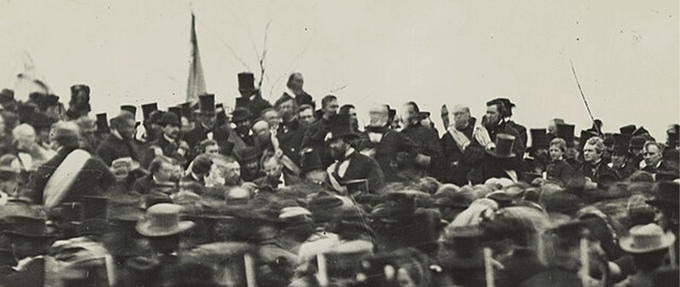
We all know of this one, but have you read it? It’s 272 words, spoken over a cemetery that had not existed a year earlier, on ground where the dead had been hastily buried after three days of fighting that left more than fifty thousand men killed, wounded, or missing.
Remember that the war was not won at this point. The war would continue for another year and five months. Lincoln did not know that Lee would surrender in Virginia. For all he knew, the Union cause was still slipping away, and these dead had bought nothing. So when he tells the living that the dead have already consecrated the ground, and that the work left undone belongs to us, he is making a promise he does not know he can keep. He is asking a grieving country to believe that the sacrifice will mean something, without any guarantee that it will.
He makes a declaration to God near the end: this nation, under God, shall have a new birth of freedom. He is a president standing in a graveyard, asking the living soldiers to have faith.
The letter
Letter to Sarah — Major Sullivan Ballou, July 14, 1861
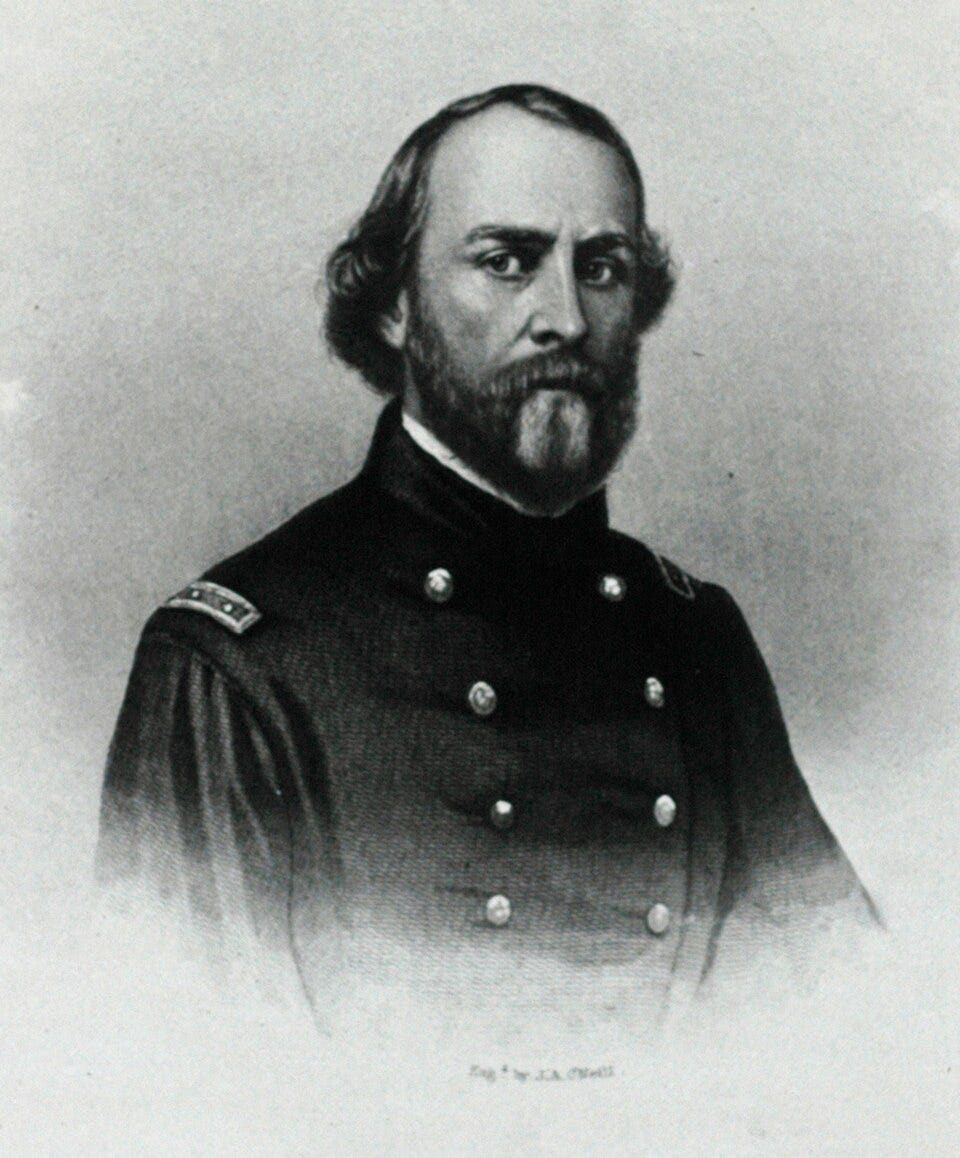
Ballou was a lawyer from Rhode Island with a wife and two small boys. He wrote this from a camp outside Washington a week before the First Battle of Bull Run. He had a feeling he would not come home. He was right. He died in that battle, and the letter to his Sarah was found in his trunk afterward.
You can see that he does not know how it will end. He is writing into the dark, weighing what he loves against what he believes he owes the country, and you can watch him make peace with God in real time. One moment he surrenders: “Not my will, but thine, O God, be done.” The next, he is reaching past death itself, promising Sarah he will find a way back to her:
But, O Sarah, if the dead can come back to this earth, and flit unseen around those they loved, I shall always be near you in the garish day, and the darkest night amidst your happiest scenes and gloomiest hours always, always, and, if the soft breeze fans your cheek, it shall be my breath; or the cool air cools your throbbing temples, it shall be my spirit passing by.
He had no way of knowing if his country would survive him, if his sons would grow up free in it, or if any of it was worth his life. He chose to serve his country and trusted God with the rest.
The one nobody sings right
The Battle Hymn of the Republic — Julia Ward Howe, 1862
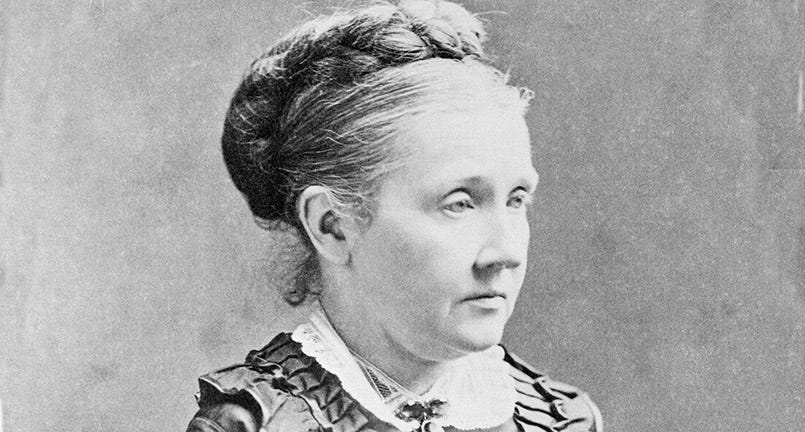
Everyone has heard the song. But almost no one knows it was first a poem Howe wrote in the dark of a Washington hotel room after a day spent watching Union troops drill. And the words are stranger and more severe than the marching tune lets on.
She reached straight into the Book of Revelation for them, into its visions of the end of the world: God descending in judgment (14:19–20, 19:15), trampling out his wrath like grapes in a winepress, bringing a day of reckoning by the sword.
She wrote it early in the war, with years of death still ahead and the outcome very much in doubt. It is not a gentle hymn. It reads the war as holy ground, the soldiers’ cause as God’s own, the bloodshed as part of a plan too large to see when living it. Where Ballou was sure of almost nothing, Howe looked at the same terrible war and saw the hand of God moving through it.
Whitman in the hospital
The Wound-Dresser — Walt Whitman
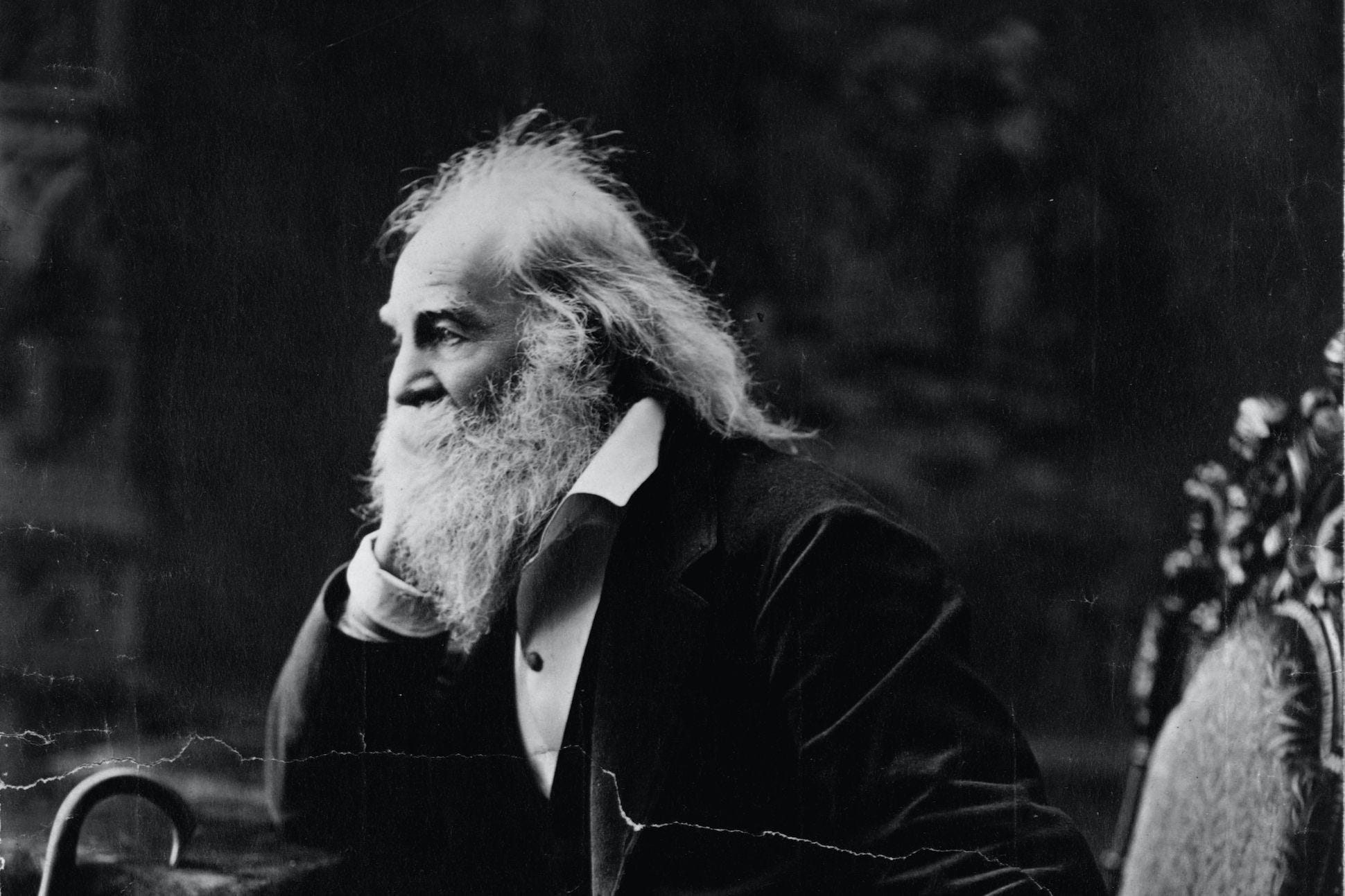
Whitman spent much of the war as a volunteer in the army hospitals around Washington. He dressed wounds, sat with the dying, wrote letters home for boys whose hands no longer worked. The poems that came out of those years are not about patriotism. They sound like a man who has seen more than a person should and refuses to look away.
I onward go, I stop, With hinged knees and steady hand to dress wounds, I am firm with each, the pangs are sharp yet unavoidable, One turns to me his appealing eyes—poor boy! I never knew you, Yet I think I could not refuse this moment to die for you, if that would save you.
He is not thinking about the cause here, or the politics, or who will win. He is holding one wounded stranger and finds that he would trade his own life for him. Whatever the war meant in Washington, this is what it came down to in the tents: one human being beside another, and a love that asked everything.
Lincoln, and then Douglass
I put these two together last because they were reaching for different things, and neither knew if they were reaching the right way.
Second Inaugural Address — Abraham Lincoln, March 4, 1865
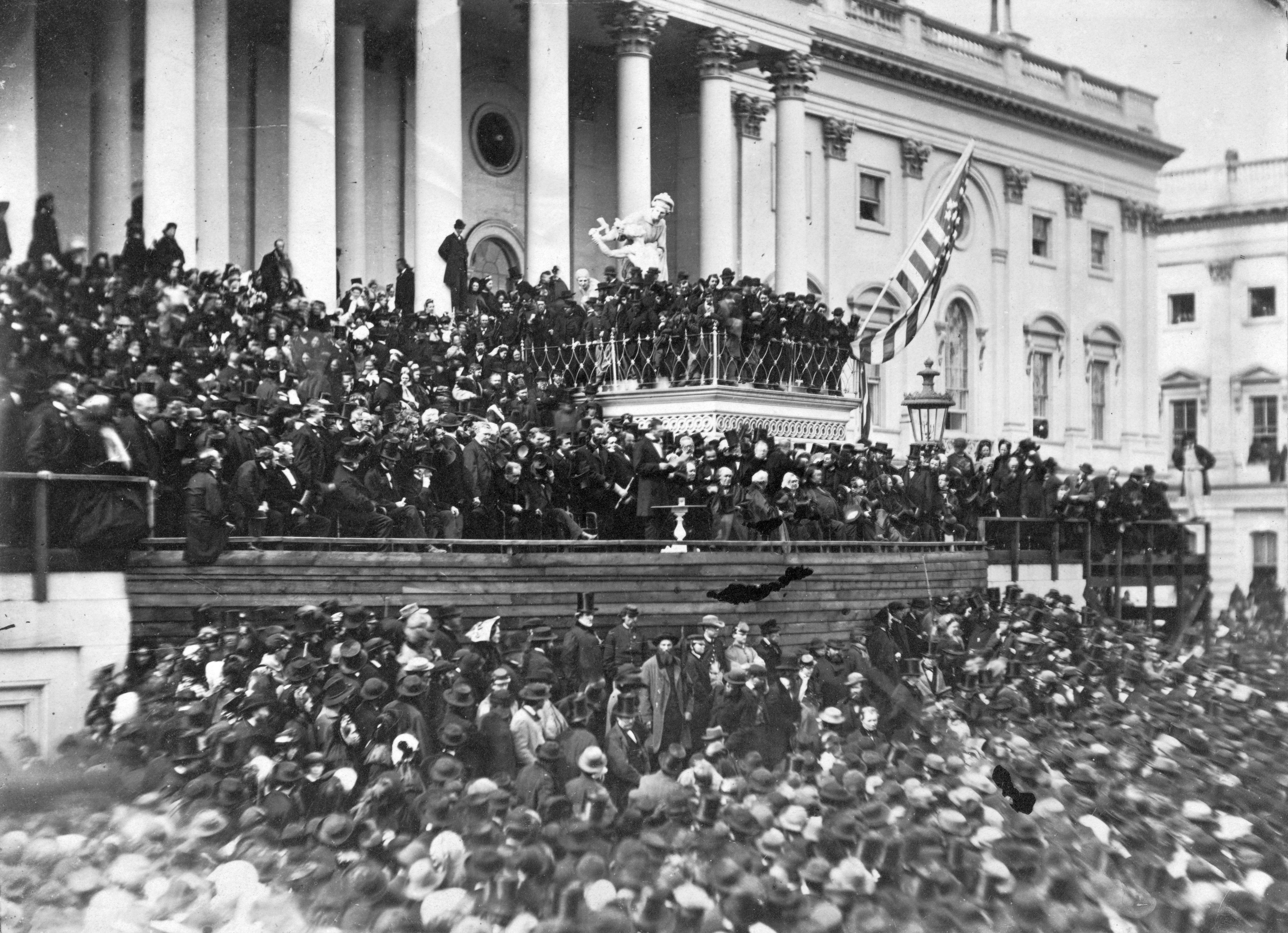
A month before he was assassinated, with the war nearly won, Lincoln stood up and refused to gloat. The speech reads like a sermon. He names slavery as the sin the whole nation is being judged for, North and South alike, no hands clean. But, instead of vengeance, he reaches for mercy: “With malice toward none, with charity for all.” He calls for America to bind up the wounds. Care for the widow and the orphan. Move forward together.
He did not know it would work. He was betting the country’s future on grace, with no guarantee it would be enough, and he would not live to find out.
Address at the Monument of the Unknown Dead — Frederick Douglass, Decoration Day, May 30, 1871
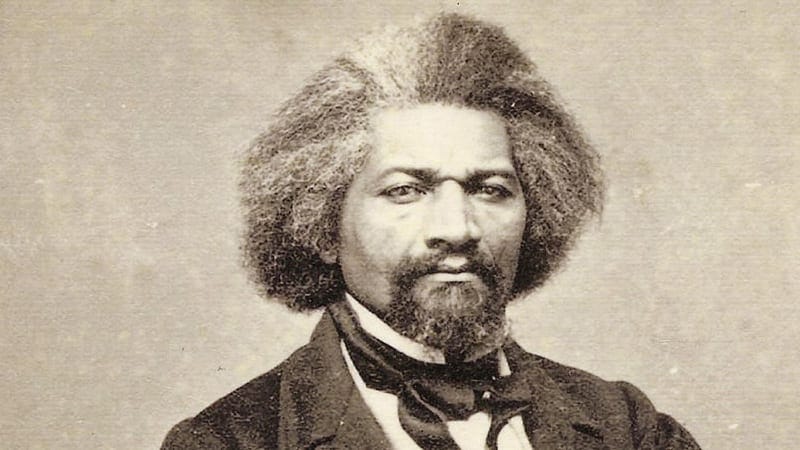
Six years later, Douglass stood at Arlington, on the holiday freed slaves had begun, and reached for something different. He opens gently, calling the cemetery air full of “lessons of all that is precious, priceless, holiest, and most enduring in human existence.” Then he plants his feet. People were already pressing him, in the name of healing, to honor both sides equally, to call every grave equally noble. He would not:
But we are not here to applaud manly courage, save as it has been displayed in a noble cause. We must never forget that victory to the rebellion meant death to the republic.
He was no preacher of malice, he said. He would not strike the fallen or turn the repentant away. But he believed that healing built on forgetting was no healing at all, and he could not yet see whether the country would prove him right or wrong.
Two men who loved the same wounded country. One reached for mercy, one reached for memory, and both were feeling their way forward in the dark, trusting that God could see the whole of what they could only see in part. We have the benefit of hindsight. They had only faith. Sit with both of them, and ask yourself which one you would have been in a year when no one knew how the story ended.
Five voices, one graveyard, none of them able to see past the next year.
We read them now, knowing how it all turned out, which makes us feel wise. They wrote without knowing anything, which made them faithful. They buried their dead, prayed over the graves, and trusted that a God they could not see was working a purpose they could not know.
We are in our own uncertain year. The division is real, the outcome is hidden, and it is tempting to believe we already know who is right and how it ends. We don’t. We are living in it, the same way they were.
So tomorrow, before the cookout, maybe pray with me.
Lord, we don’t know the end of our own story any better than they knew theirs. Give our leaders the wisdom they don’t yet have. Heal what is broken in our families, our friendships, our country. Comfort the families who stood in church this morning with an empty seat at home. And bless the souls of all who died believing the sacrifice would mean something, whether or not they ever got to see that it did. We are in it, and we cannot see the way out. We trust that You can. Amen.
— Until next Sunday.

P.S. No edition of The Read tomorrow.
This is one of my favorite things ever from you. So well said, and worth keeping to read every year and also to forward on to others.
The prayer you wrote is so important. It reminds us we are not in control but we have a good God that is. Thank you for writing this article.