

Sunday Desk | Snowstorms, Socialism, and a Guy on a Bike
A snow day ramble through books, movies, stew, and the content social media was actually made for

Well, the snow and ice storm that was predicted to shut down Chattanooga was a bust, thankfully. But that doesn’t mean everything didn’t close; even our church canceled services. Saturday morning, we were going to visit a new bagel joint, but it was closed because of the weather. So, we went to Waffle House instead because, you know, if you live in the south, the only thing that is likely to close a Waffle House is the apocalypse.
Unfortunately, much of my Saturday morning was consumed with the latest events in Minneapolis, which I will break down for you later. Eventually, I switched gears, and we enjoyed our evening in with a fire, some beef stew, and a marathon of James Bond.
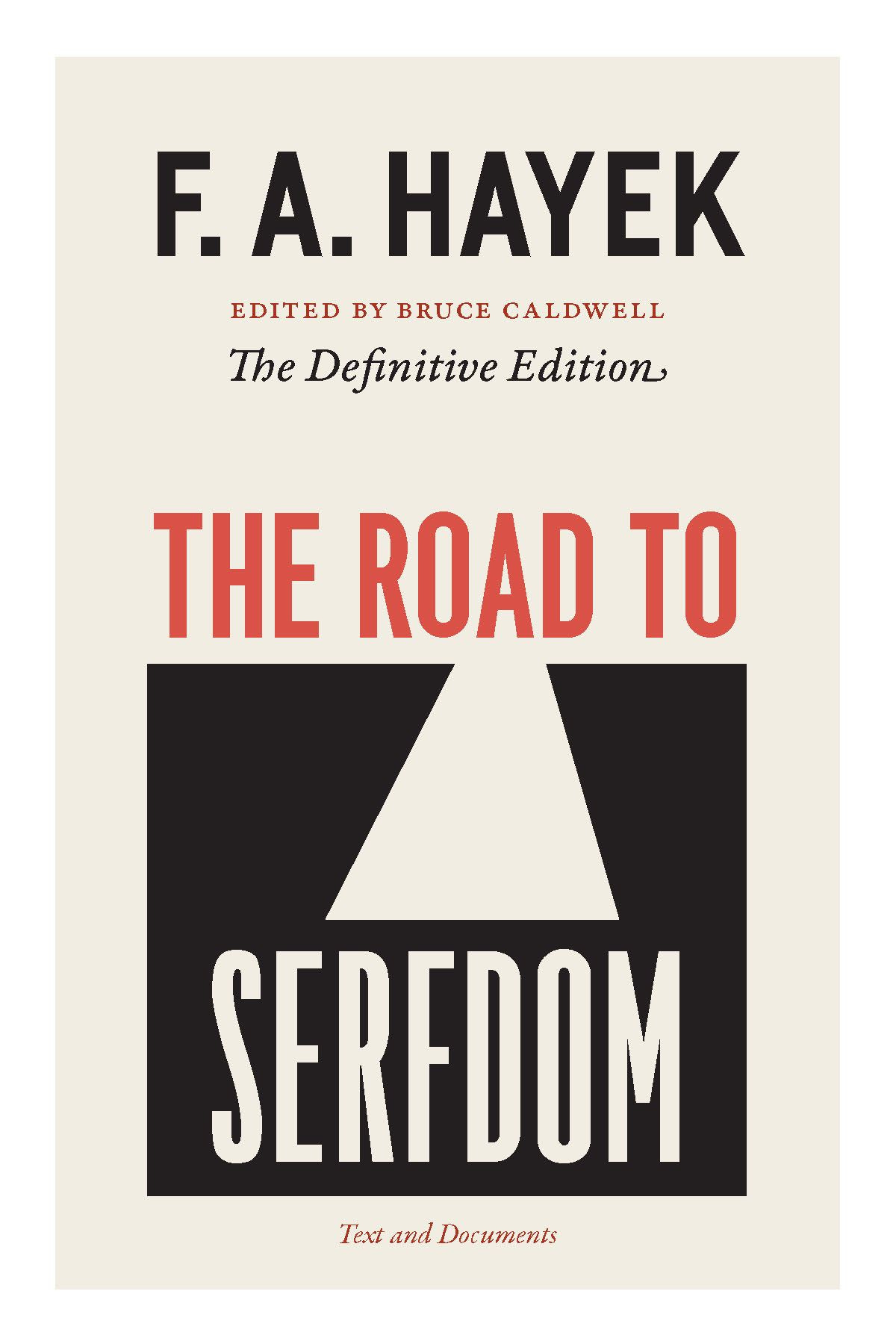
The Road to Serfdom, F. A. Hayek
I finally finished this one, and let me tell you, reading Hayek is a must in 2026.
I will be upfront, this is in no way a light read. It took me time and focus, the kind of focus that requires a quiet room and probably too much coffee. Hayek is verbose. The man never met an example he didn’t want to explore from six different angles. But here’s the thing that kept me turning pages despite the density: it’s disturbing how relatable this book is to our current moment.
The Road to Serfdom was published in 1944. The war wasn’t even over yet, and this Austrian economist was already diagnosing exactly how free societies sleepwalk into tyranny. Not through dramatic coups or obvious villains — but through planning. Through well-meaning bureaucrats. Through “temporary” measures that never sunset and “emergency” powers that become permanent fixtures.
Sound familiar? It should.
Why do you need to read it? Because Hayek wasn’t writing abstract theory. He was watching it happen in real time. And his central argument is one that modern discourse has conveniently memory-holed.
We’re taught — relentlessly — that the Nazis rose to power on the back of nationalism. Far-right extremism. Full stop. That’s the narrative. But Hayek, writing as Germany burned, makes a different case: it was socialism that built the road. Nationalism just drove down it.
The collectivist infrastructure was already there. The normalization of central planning. The idea that the state should direct economic life “for the common good.” The intellectual class had already accepted that individual liberty was a small price to pay for the plan. The Nazis didn’t have to build the machinery of control — German socialists had done that for them. They just had to seize the wheel.
I mean, the party was literally called the National Socialist German Workers’ Party. Modern framing treats that word as incidental, almost embarrassing, a quirk of branding that surely didn’t mean anything. Hayek argues it was foundational.
Now, why does this matter in 2026?
Because “Democratic Socialism” is having a moment. It’s been rebranded as compassionate. Inevitable. Not that kind of socialism, we’re assured. Just the good parts — healthcare and education and equity — without any of that icky authoritarianism.
Perdoname, but Hayek would like a word.
His warning isn’t about mustache-twirling dictators. It’s about the slow creep. The language that shifts meaning. “Planning” sounds reasonable. “Economic security” sounds humane. “For the common good” sounds noble. “Empathy” sounds like compassion. But each step down that road requires a little more control, a little less liberty, a little more trust that the people in charge know better than you do.
The road to serfdom isn’t paved with malice. It’s paved with pamphlets and good intentions.
Is the book perfect? No. Some sections feel dated, and Hayek’s academic style can be dense. But the core argument is a gut-punch, especially if you’ve been paying attention to how quickly “emergency measures” become “the new normal.”
Read it. Make notes, then read it again.
⭐⭐⭐⭐⭐ — Required reading for anyone who wants to understand how free people vote themselves into chains.
Next on My Reading List

Zero Hour! Airport or Airplane?
It’s cold outside, and depending on where you are in the country, you’re either snowed in or — worse yet — iced in. If you’re the latter, you might not have power, so you might have to stick to a book for entertainment, and PLEASE stay warm. But if you’re home with power and looking for something to watch, might I make an odd suggestion?
Depending on your age, you might be familiar with the 1980 comedy Airplane!, starring Leslie Nielsen, where landing the plane safely hinges on a pilot with a “drinking problem” who didn’t eat the fish dinner.
Well, did you know that Airplane! is a spoof of the 1957 film Zero Hour! mixed with the disaster series Airport?
And here’s where it gets interesting: it’s not just a spoof. It’s practically a shot-for-shot comedic remake.
The writing trio behind Airplane! — Jim Abrahams and brothers David and Jerry Zucker stumbled across Zero Hour! while recording late-night TV to harvest commercials for parody material. They weren’t even paying attention to the movie at first, but then they started actually watching it and realized they’d struck gold. Jerry Zucker later called it “a perfectly classically structured film.”
How closely did they follow it? The main character in both films is named Ted Stryker. The food poisoning from the fish dinner? Straight from Zero Hour!. The little boy visiting the cockpit? Same. Even the line “Looks like I picked the wrong week to quit smoking,” that’s lifted directly from the 1957 original.
The Zucker brothers borrowed so much that they actually purchased the rights to Zero Hour! for about $2,500, just to make sure they were legally covered. They didn’t just use the script — they copied staging, camera angles, everything. Then they simply added jokes after the serious lines.
But wait, there’s more.
Zero Hour! was written by Arthur Hailey, a former RAF pilot who knew his way around aviation drama. A decade later, Hailey wrote the novel Airport, which became the 1970 blockbuster that launched the entire disaster movie craze of the ‘70s — Airport 1975, Airport ‘77, The Concorde: Airport ‘79. The Zucker brothers pulled from those too, including the singing nun (played in Airplane! by Maureen McGovern, who had actually sung the theme songs for The Poseidon Adventure and The Towering Inferno).
So Arthur Hailey essentially created the airline disaster genre twice — first with Zero Hour! in 1957, then with Airport in 1970. And then Airplane! spoofed both so effectively that it basically killed the genre entirely.
One man’s work spawned the template, the franchise, AND its destruction. That’s a legacy.
Here’s my suggestion for your snow day: Watch Zero Hour! First, it’s available on YouTube, and then immediately follow it with Airplane! on AMC+ or rent it on AppleTV. You’ll never watch the comedy the same way again. Every joke lands differently when you realize they’re not just parodying a genre, they’re parodying specific scenes from a movie most people have never heard of.
Then, if you are still snowed in, you can move on to the Airport disaster movie trilogy, available to rent on Prime Video or Apple TV.
Fair warning: once you’ve seen Zero Hour!, it’s impossible to take it seriously. The moment someone asks the little boy if he’s ever been in a cockpit before, you’ll be on the floor.
Stay warm. Watch something ridiculous. And don’t eat the fish. 😉
A Recipe
One of my favorite cold-weather stews!
Sancocho is a hearty stew with humble origins, found in various forms throughout the Spanish Caribbean and Latin America. It’s a satisfying dish made with beef tips, beef stock, and a variety of starches native to the islands and Africa. The most common starches are yuca, calabaza (auyama), green banana, potato, and plantain. But you can use other varieties that are available to you locally. And you cannot forget the corn! The stew is heaven, bursting with flavor, and it gets even better the next day.

Sancocho (Puerto Rican Beef Stew)
Ingredients:
2 Tbs olive oil
5 garlic cloves, minced
1 1/2 lbs top round beef, cubed into 1-inch pieces
1/3 cup yellow onions, chopped
1/3 cup green pepper, chopped
5 sprigs of cilantro, chopped
1 teaspoon salt
1/4 teaspoon ground black pepper
4 quarts beef stock
1 green plantain, peeled and slice into 1-inch pieces
1 yellow plantain, peeled and sliced into 1/2 inch pieces
1 medium sweet potato, diced into 1-inch pieces
1 medium yuca
1/2 lb butternut squash, peeled and cubed into 1-inch pieces
3 medium new potatoes, peeled and quartered
2 ears of yellow corn, cleaned and sliced into 6 parts each
Instructions:
In a preheated dutch oven or heavy pot over low-to-medium heat, combine olive oil, garlic, beef cubes, and onions, stir until beef is brown on all sides and onions begin to caramelize.
Add in chopped pepper, cilantro, salt, pepper, and 1 quart of beef stock. Cook down until the stock is reduced by half, about 20 minutes.
Stir the beef, then add all the remaining vegetables and the remaining beef stock. Bring to a boil. Lower to a simmer and cover for 30 minutes.
Uncover and simmer for 20 - 30 minutes or until the stock has reduced some, the meat is tender, and the vegetables are soft. Serve
I am sorry you are biking to where?
Every once in a while, you stumble across something on social media that reminds you why we built these platforms in the first place. Before the algorithm hijacked everything. Before the rage-bait and the perfectly curated lies. Back when the promise was: connect with the world.
Meet Ian Andersen, a guy on a bike, pedaling his way to Japan. And by “to Japan,” I mean through Iran —while it was being bombed — Afghanistan, Russia, Mongolia, and now China. On a bicycle. Powered largely by cigarettes, beer, and what I can only assume is an unholy amount of determination.
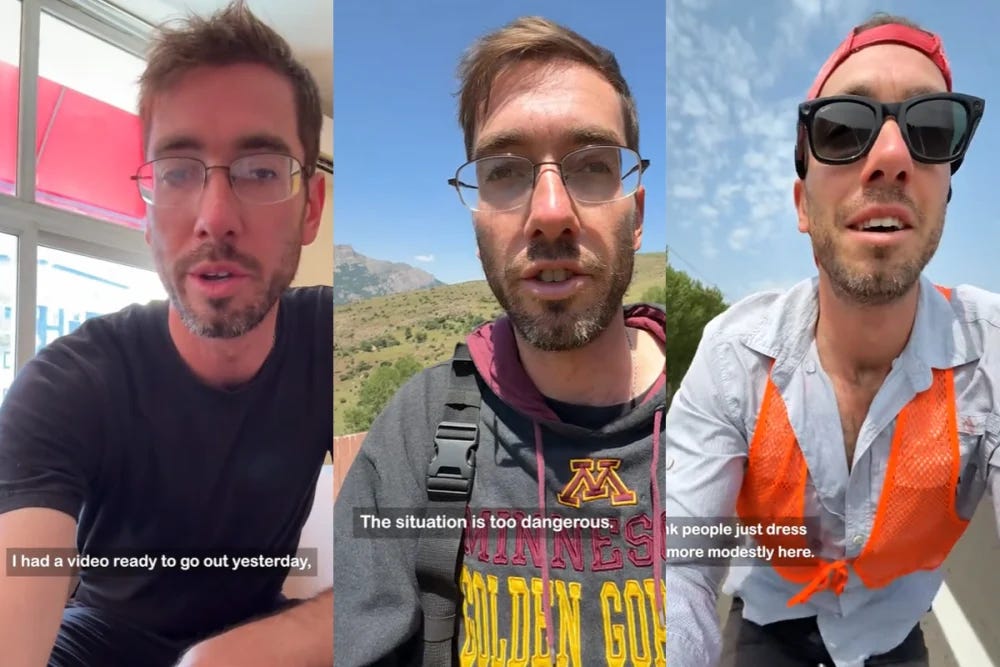
I binged his posts in one afternoon and haven’t stopped checking his stories since.
Here’s what gets me: this isn’t some polished travel influencer content. Some nights he’s in a hotel. Many nights, he’s taken in by strangers, families who don’t speak his language but feed him anyway. And some nights? He’s camping in abandoned buildings, alone with his thoughts and whatever wildlife decided to claim the place first.
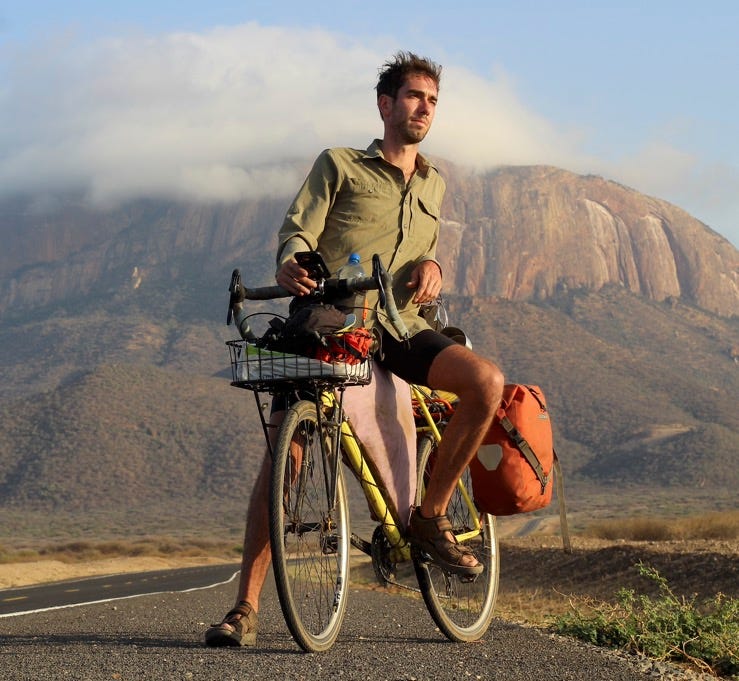
The stories are wild and sometimes skeachy. He had to essentially escape Iran. He biked through Taliban-controlled Afghanistan. He raced across Russia against an expiring visa, pushing up frozen hills where the temperatures dropped so low his gears seized. He spent two months stuck in Mongolia, waiting for a Chinese visa, just... existing in limbo.
It’s exploration. It’s bravery. It’s also, if I’m being honest, inspiring.
He has implied that he has a challenging history, and it seems like he is searching for something. Or running from something. Maybe both, depending on the day. There’s a quiet grief underneath the adventure, a sense that this mission isn’t just about seeing the world, but about finding a reason to keep moving through it. The freedom is obvious. The loneliness, you have to read between the lines.
In a feed full of noise, Ian’s account is the real thing: raw, human, and deeply compelling. It’s the kind of content social media was actually made for.
Give him a follow: @ridewithian
That’s a Wrap
So there you have it, a little bit of everything this week. Some Hayek to make you think, some Airplane! trivia to make you laugh, a stew recipe to keep you warm, and a guy on a bicycle reminding us that the world is still worth exploring, even when it feels like everything is falling apart.
This is what Sunday Desk is about: slowing down, stepping back from the news cycle chaos, and remembering that life is more than headlines and hot takes. Sometimes it’s a fire, a bowl of stew, and a James Bond marathon. Sometimes it’s discovering that a comedy you’ve watched a dozen times is secretly a shot-for-shot remake of a 1957 drama you’ve never heard of. Sometimes it’s watching a stranger bike through Afghanistan and realizing the world is stranger and kinder than the algorithm wants you to believe.
Whatever your week holds, I hope you find a moment to breathe. Read something that challenges you. Watch something that makes you laugh. Cook something that fills your home with warmth and spend time with the ones you love.
And if all else fails, there’s always Waffle House.
Until next time — stay curious, stay warm, and say no to the fish.

Thanks for the update on the bike guy! I stumbled on his Instagram account when he was going through Afghanistan. Good for him for persisting.
Speaking of biking...last night/today (time zones) during the final stage of the Tour Down Under cycling race, 2 kangaroos hopped into the road while the whole peloton was coming out of a downhill section. It caused a huge crash that took out several riders, including hitting the guy who was in the lead! And then they just hopped away, totally nonchalant about it. Absolutely wild. I've never seen anything like it.
https://www.espn.com/olympics/cycling/story/_/id/47722859/jay-vine-wins-tour-crash-caused-kangaroo