

Sunday Desk | Paint Mistakes, Ink Tracing, and the Time Key West Declared War on America
Mission Creep — Two weeks on a weekend project, a writing curriculum I assigned myself, and the time Key West declared war on America.

I apologize for my absence. I threw myself into a DIY project, and if you’ve been following me on Instagram, you already know exactly what I mean. Here’s the thing about me: I am not a great multitasker, especially when it comes to big projects. I get fixated. It’s actually one of the reasons I had to stop playing video games — I would become completely obsessed and do nothing else until I accomplished the mission. Not productive. Not great.
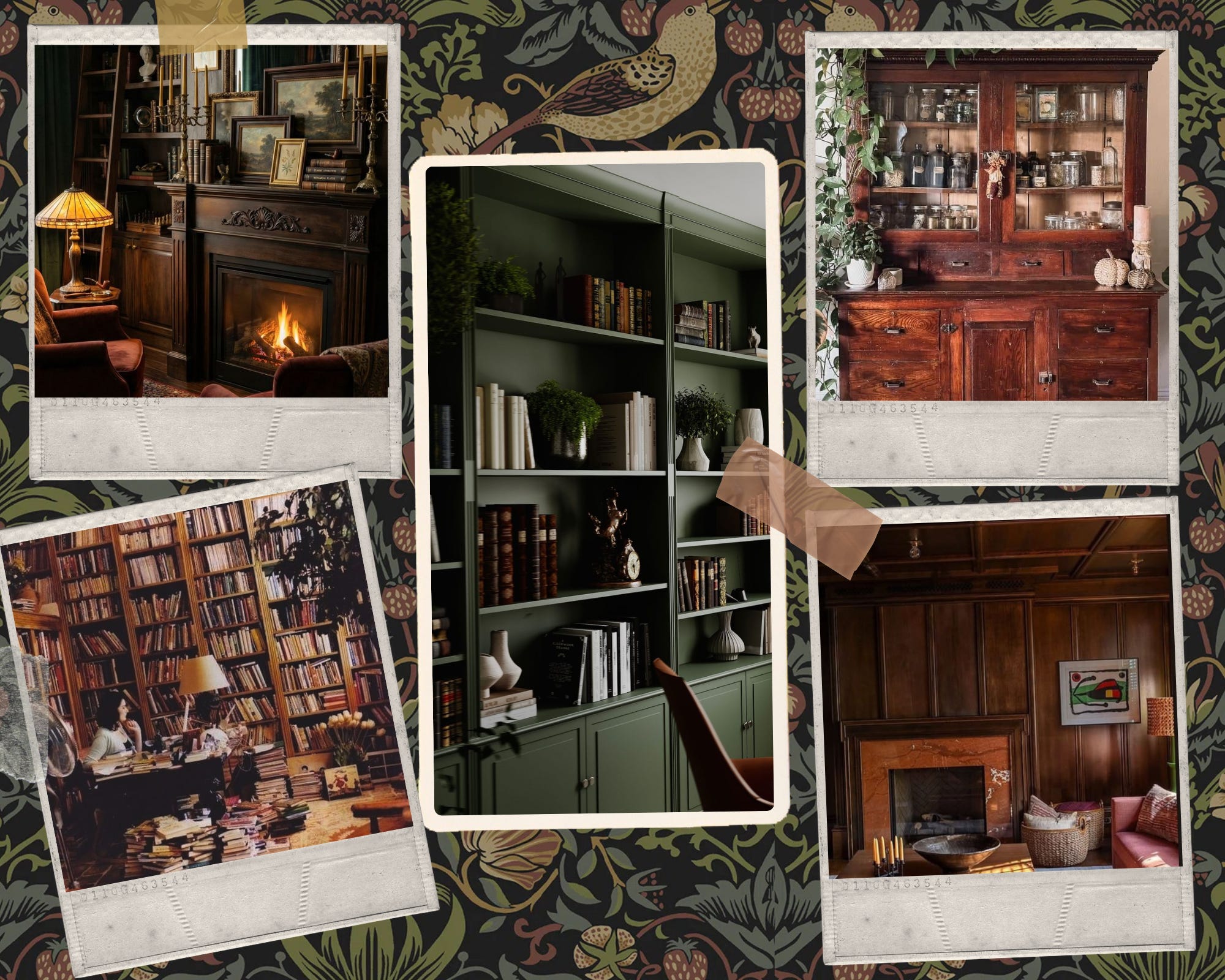
My most recent obsession has been redoing my home office. I genuinely thought I could knock it out over a weekend, maybe a week at most. We are solidly two weeks in, and while I am back in my office, it is not yet complete. We had a few instances of mission creep, which delayed finishing the project — but honestly? I love how it’s coming along. It’s shaping up to be exactly what I envisioned.
The whole vibe I was going for was cozy, quiet, and intentional — a space where I could shut out the noise and actually focus on work, reading, and writing. So far, it looks like I’ve pulled it off.
By the way, I have included some affiliate links to the items we used. So if you click it and buy it, thank you for your support. ;)
The Color
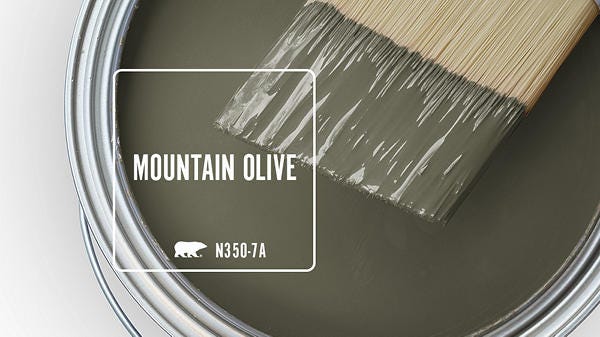
I have drenched this office in Mountain Olive by Behr, and I am absolutely in love with it — walls, ceiling, trim, all of it. It’s my favorite tone of green. It’s dark. It’s moody. It’s comforting. It’s everything I wanted this room to be.
That said, the project did not start off well.
I made the mistake of confusing my paint colors and ordered from a leftover I had upstairs — a very bright green I’d used as an accent wall in one of the guest rooms. I didn’t catch the mistake until I came downstairs the following morning to find all four walls of my office painted a very vibrant, very wrong green. An entire day lost. I had to start over and repaint everything in Mountain Olive, which, again, I cannot express how much I love. Consider that my official endorsement.
The Built-In Bookcase
One of the bigger projects in this room is the built-in bookcase, which I’ll be honest — it’s a little jerry-rigged, and I mean that affectionately.
The original plan was for my husband to build it from scratch using hardwood. He has many projects on his plate, and I have zero patience to wait, so I purchased three bookcases from Amazon instead. (I know, I know — the Billy bookcase from IKEA is the standard move, but the Billy is too large for the space I was working with.) After a lot of digging, I found these three, and they fit the space perfectly. They’re not IKEA quality, but they’ll do for now, and it buys my husband some breathing room before he eventually builds me the real thing. Estimated time of arrival: three years, give or take.
I did a light sanding before painting them, though in hindsight I should have primed them first — the paint is a little delicate in some spots and has peeled where anything hard catches on it. With books, though, it’s holding up fine. As for the actual built-in installation, that was entirely my husband’s doing. I know he used some 2x4s, screws, and plywood. That’s all I’ve got. I handled the painting. I also swapped out the cabinet knobs for antique brass and added picture light fixtures above the bookcase, which my husband wired — another department I have no information on.
The Wallpaper
I found the wallpaper on the Home Depot website. It comes in two colorways — black and green — though the “black” version is really just a dark background with the detail rendered in green tones, along with the most charming red strawberries. It’s a genuinely lovely pattern.
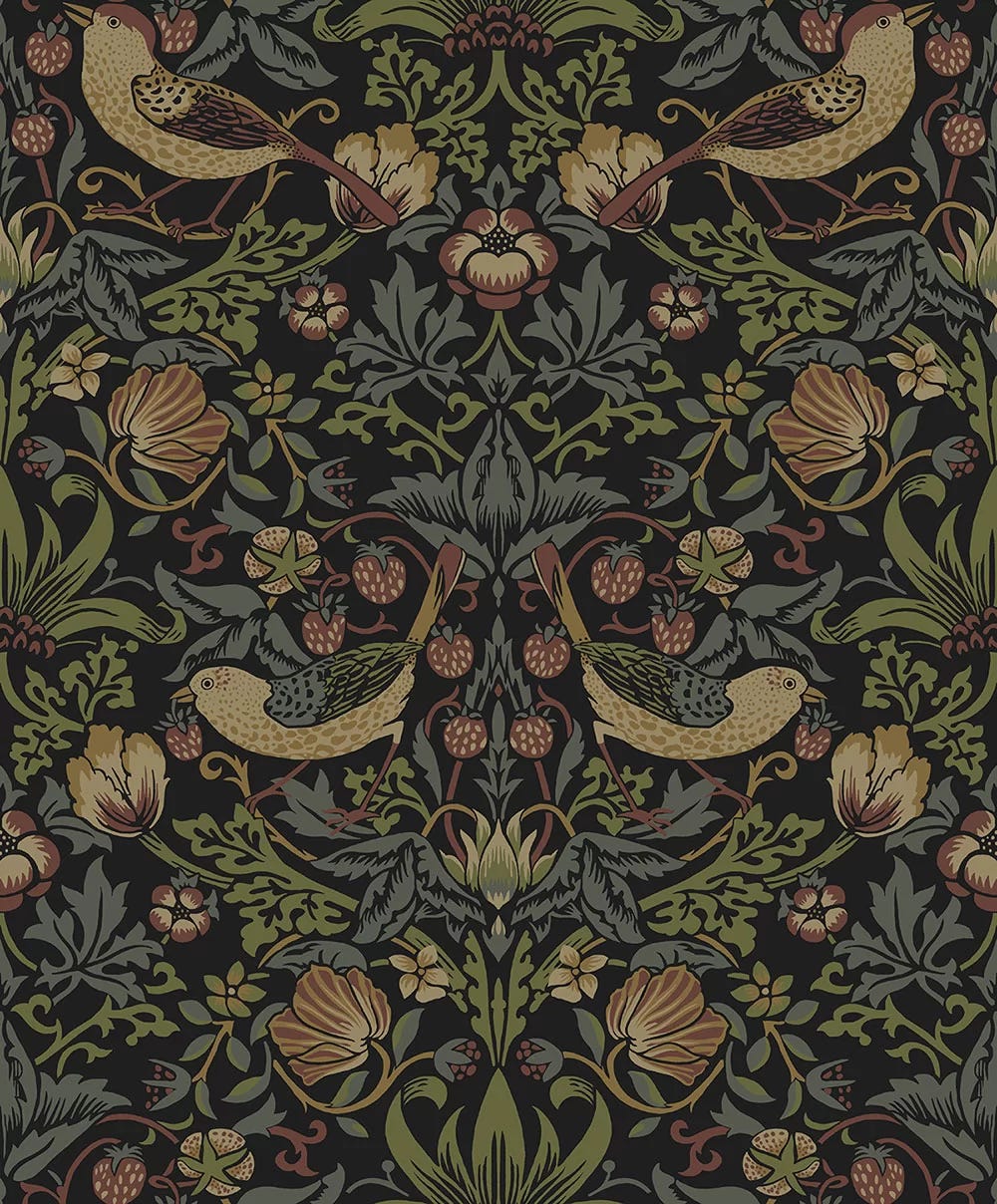
This is a peel-and-stick wallpaper, not a glue-on, and the type I chose allows for adjustment during application, which I appreciated. It’s also more of a vinyl than traditional paper, so you can stretch it slightly to get the pattern lines to line up — a small but very welcome detail.


The Rug Saga
I also got a brand-new area rug for the room — though not without a detour.
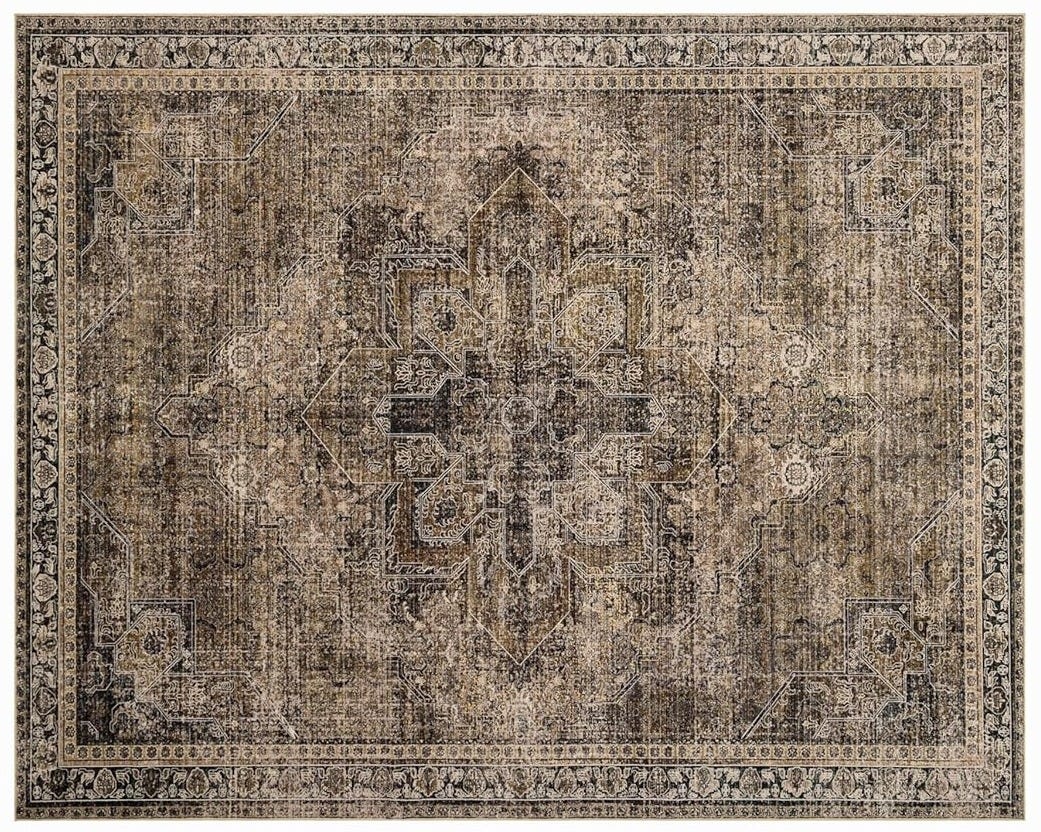
My initial purchase was a burgundy red rug, which turned out to be a catastrophic mistake. Against the paint, the whole room looked like Christmas, it also clashed with the wallpaper. I have no idea what I was thinking. I returned it immediately and replaced it with a brown faded area rug, and I cannot overstate how much I love it. It doesn’t feel like a traditional rug at all — it’s velvety underfoot, it’s thin enough to fold and manage easily, and according to the packaging, it’s washable. As in, I can put it in a commercial front-load washer. When you have a home with five dogs, the words “washable rug” are genuinely life-changing. I haven’t tested that yet, but when I do, I’ll report back.
What’s Left
We still have quite a bit of finishing work ahead. The baseboards and crown molding aren’t done yet, and the ceiling — originally a popcorn ceiling, which I refused to deal with after past experience — is being covered with painted cabinet-quality plywood. My husband routed the edges of some 2x1s to create a grid pattern that will cover the seams and give the ceiling a more finished, intentional look. It’s going to be beautiful.
The bookcase still needs some trim added to it, and a slightly funny note, when we first installed the bookcase lights, we realized they don’t have switches. We assumed they would. They do not. So when we first wired them in, they could not be turned off. My husband got it situated after a moment of frustration.
Once all the finishing touches are done, I’ll install the window treatments, add artwork to the walls, and finish filling out the bookcase. I’m also on the hunt for a new leather club chair to replace the lounger I currently have in the corner.
It’s not done. But it’s getting there — and you’ll be seeing a lot of it in the background of upcoming podcast episodes. In the meantime, please enjoy the very unedited, very real, I-don’t-care photos of my unfinished office. You’re welcome.
Ink Tracing
I’ve discovered ink tracing, and I think I’m in love. At least for now. If you’re a fan of adult coloring books, you’re going to want to try this.
It was my long-time girlfriend who pulled me in. About a month ago, she sent me an IG reel of an account selling an ink tracing set, and I immediately bought the book and the extended pack of pens.
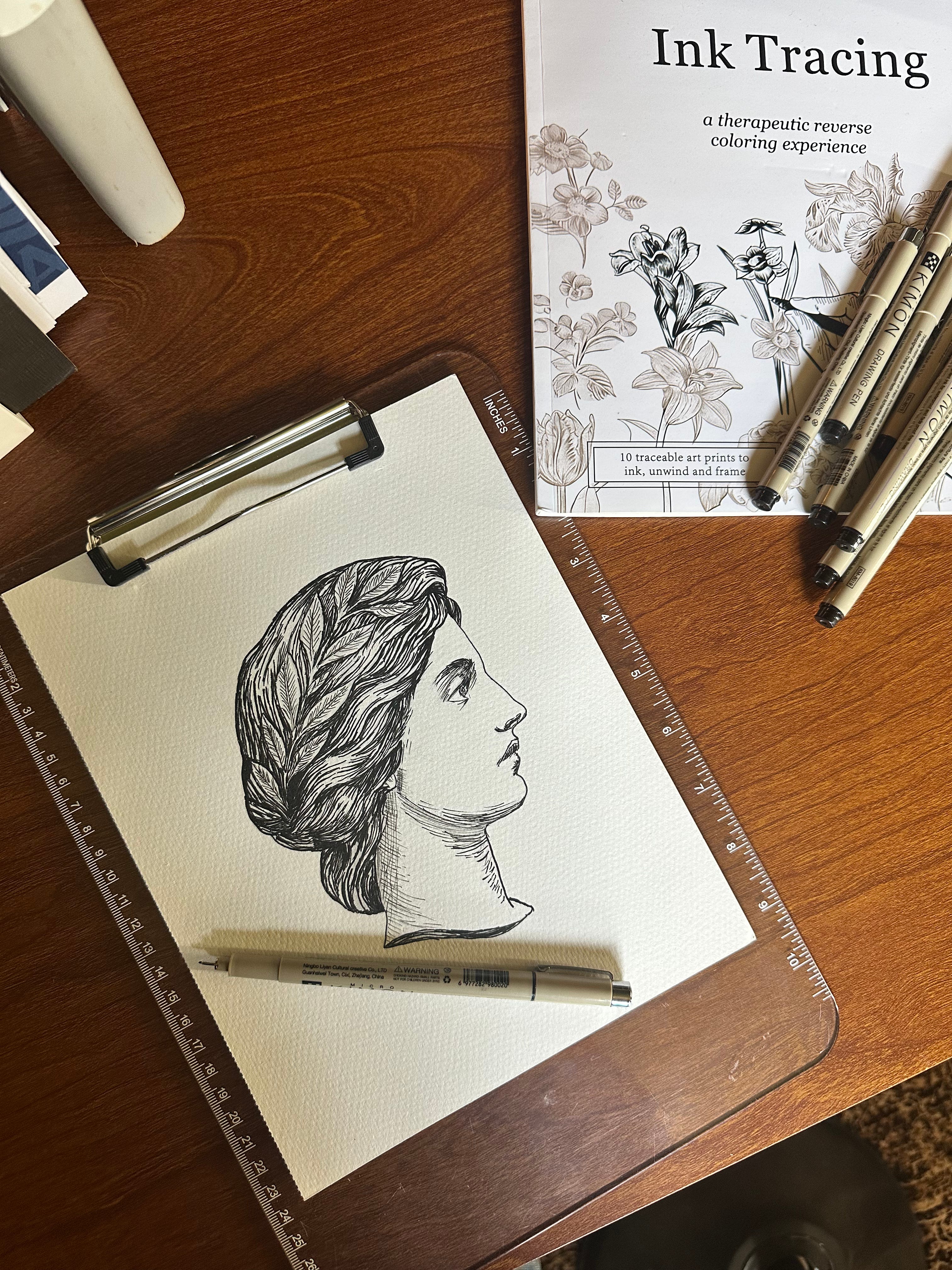
What I love about this particular book is the paper stock — it’s sturdy, and once you’re done, you have a frameable piece of art. I fully intend to frame this lady and hang her in my office. The one downside is that the book only has 10 images, and I can already see myself flying through them. I’ve found other ink tracing books on Amazon with close to 100 images, but I suspect those are designed for laying tracing paper over rather than working directly on the page like this one. I’ll report back once I inevitably cave and buy one.
Anyway, ink tracing is fun. Give it a try.
I Started a Writing Curriculum. Here’s Week One.
Remember a few weeks ago when I shared that I decided to be a student again.
Not in the enrollment-and-tuition sense. More like: I sat down, built myself a writing curriculum from scratch, and told myself to actually do the assignments. No skipping. No skimming. No convincing myself that reading about a technique counts as practicing it.
Week One is called The Engine of Story: Tension + Change, and if you’ve ever tried to make a piece of writing feel alive instead of just correct — something I struggle with — you already know why that’s the right place to start.
The objective for the week was simple on paper: recognize tension in any piece of writing, identify where change occurs in a narrative, write a short fictional scene that contains both, and apply it. Four parts, each about 20–30 minutes.
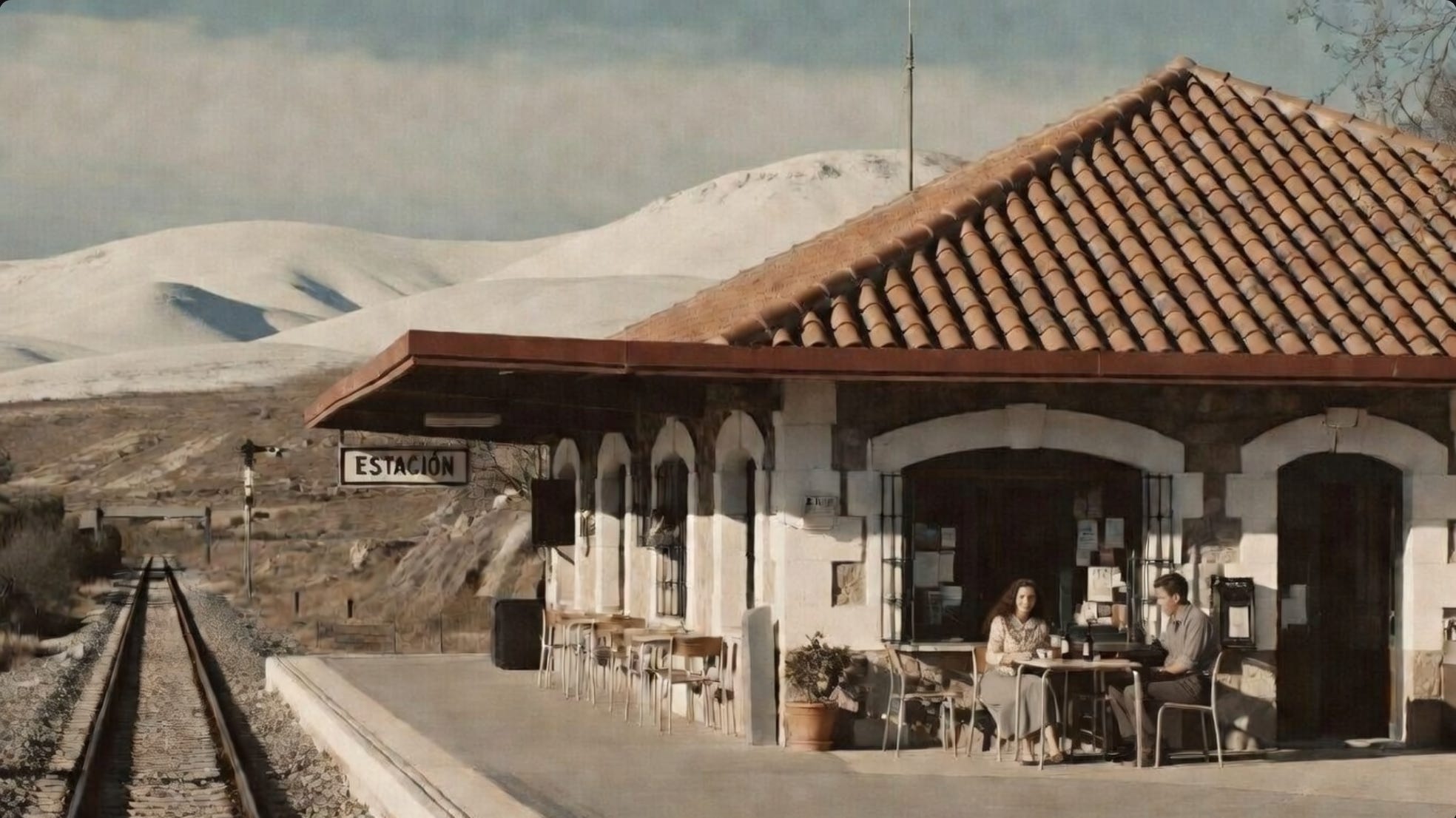
Here’s how it broke down:
Part 1 — Reading. Two texts. Hemingway’s Hills Like White Elephants (short, brutal, nothing happens and everything happens) and the opening of Tim O’Brien’s The Things They Carried (just the first 10–15 pages — the list section). The goal wasn’t literary analysis. It was mechanics. Where is the tension? What changes? How does the writer build it without telling you it’s there?
I was really surprised by how much these short readings struck me. They contained a lot of hidden tension and symbolism. Fantastic writing.
Part 2 — Analysis. Take one of the readings, answer four questions: What is the central tension? What happens if that tension disappears? Where does the emotional temperature rise? What changes by the end? The prompt at the bottom of the assignment sheet is blunt: If there’s no change, there’s no story.
Part 3 — Fiction Drill. Write an 800–1,200-word scene from a specific prompt, with a strict rule set designed to force you away from exposition and into the body, the room, and the subtext. No explaining. No speeches. End at the moment of irreversible choice. Not after. Don’t over-explain, something I do all the time.
Part 4 — Application. Pick one recent article. Find a paragraph that is informational. Rewrite it as a narrative. Same facts, different tension.
Want the full Week One curriculum? I’ve linked it here: 👉 PHASE 1 – WEEK ONE | The Engine of Story: Tension + Change
I did all four assignments. And I’ll be honest — Part 3 surprised me with what came out.
Paying subscribers can read all of my completed work below the paywall. ⬇️
Some of What I Consumed
This Sixties Musician Died Mysteriously. Was He the Victim of a Serial Killer? - Rolling Stone
A dive into the history of Iran - 60 Minutes Archive
The Gray House (Series) - Prime Video
Between the sheets at the college Excel championships - Washington Post
James Talarico represents Christianity’s past, not its future - Washington Post
The Day Key West Declared War on America (and Won) - 1982
There are protests, and then there is this.
Most people, when pushed to the edge by federal bureaucracy, write a strongly worded letter or maybe a very angry post nobody reads. The people of Key West, Florida, looked at that option, folded it neatly in half, and chose chaos instead, and you all know I love a little chaos. In the most spectacular, sun-soaked, absolutely unhinged act of civic theater ever staged on American soil, they seceded from the United States, declared war on the federal government, surrendered immediately, and demanded foreign aid — all in under two minutes.
You guys, it worked.
Let’s back up.
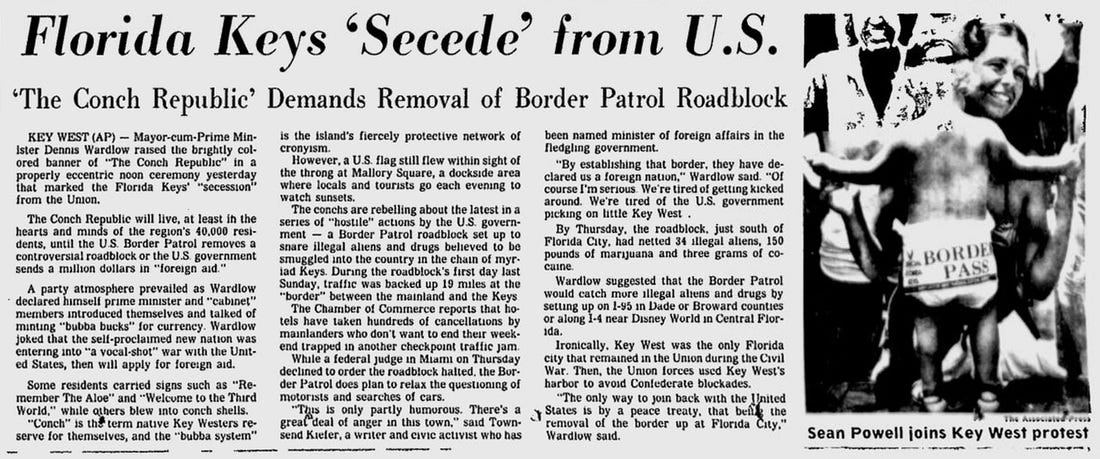
In the spring of 1982, the U.S. Border Patrol set up a roadblock on U.S. Route 1 at Florida City, the only road that connects the Florida Keys to the mainland. The stated purpose was to intercept undocumented immigrants and drug smugglers. The practical effect was treating every single person leaving Key West like they were crossing an international border. Cars were backed up for miles. Tourism cratered. The locals, already a particular breed of sun-drenched, salt-worn, very-much-not-interested-in-your-federal-nonsense types, were furious.
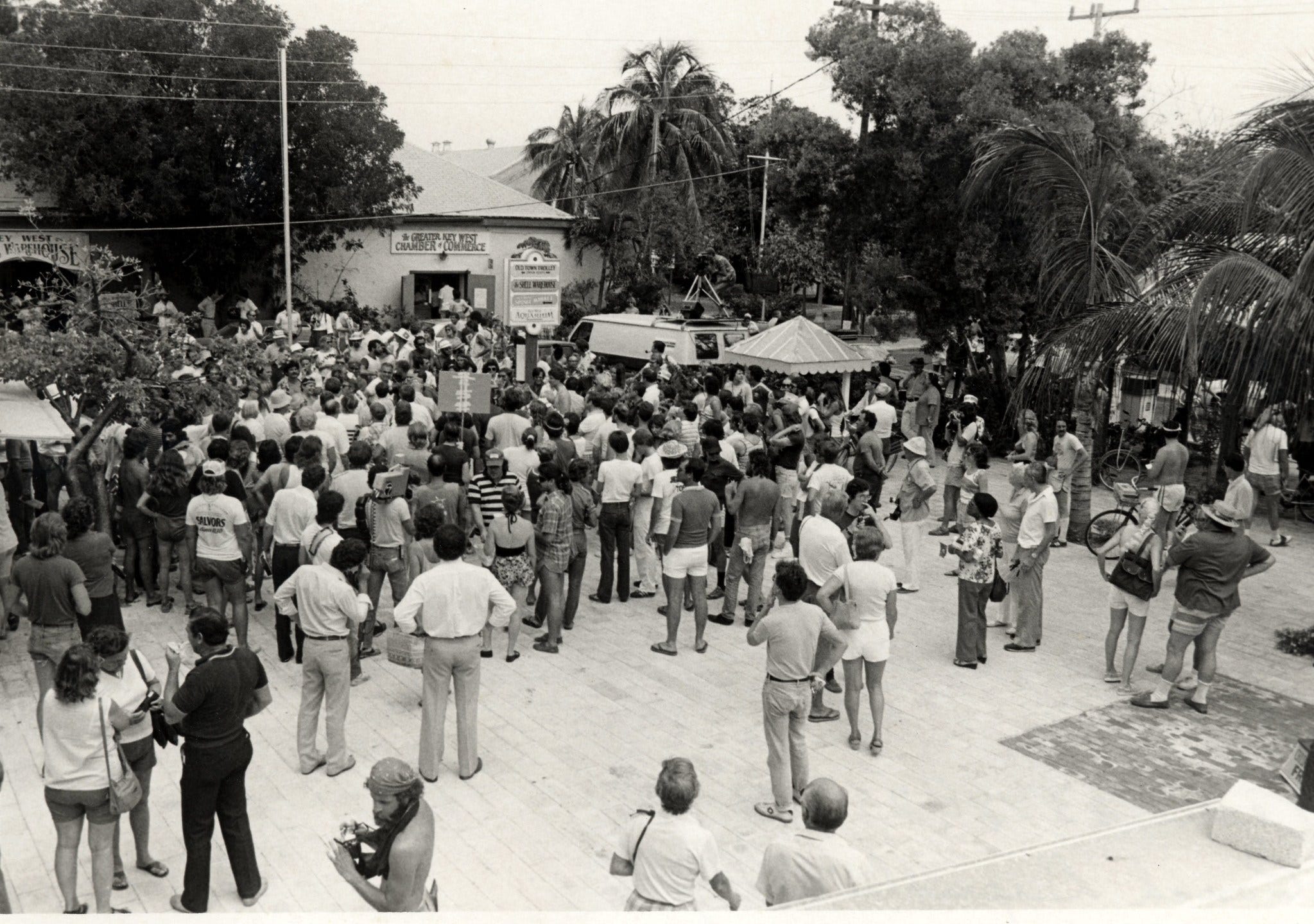
Mayor Dennis Wardlow drove up to Miami to seek a federal injunction to have the checkpoint removed. The court said no. And here is where a reasonable mayor returns home, holds a press conference, and sighs deeply into the camera. Dennis Wardlow was not that mayor.
On April 23, 1982, he stood in Mallory Square — Key West’s famous waterfront plaza, the same spot where locals gather every single evening to collectively applaud the sunset like it’s doing something new — and announced that the Florida Keys were seceding from the United States of America, effective immediately. The Conch Republic, named for the beloved sea creatures and the longtime nickname for native Key Westers, was born.
They had a flag. They had a prime minister. They had a whole aesthetic.
Then, in a move that can only be described as inspired, they declared war on the United States. The entire military campaign lasted approximately one minute and involved breaking a stale loaf of Cuban bread over the head of a man in a U.S. Navy uniform. (I want to be very clear: this was consensual. He was a prop. The bread was the weapon.) Having engaged in sufficient hostilities, Prime Minister Wardlow immediately surrendered to the Admiral of the U.S. Navy base nearby, and then, in a masterstroke, demanded $1 billion in foreign aid to help rebuild the war-ravaged nation.
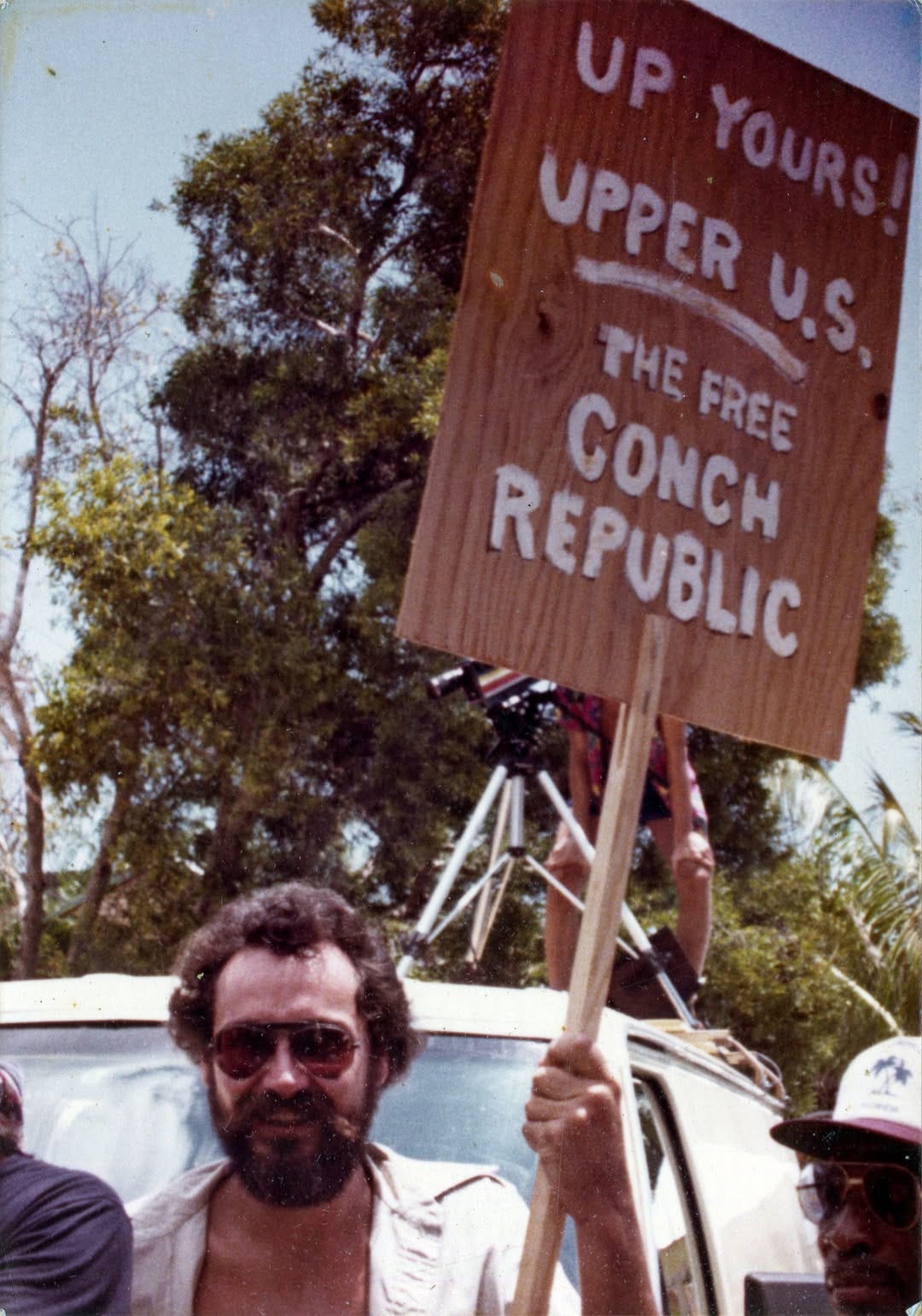
The federal government, to its credit, apparently had no protocol for this.
What followed was equal parts farce and political brilliance. The press ate it alive. The story spread. Tourists, delighted by the whole spectacle, flocked to Key West not in spite of the absurdity but because of it. And the Border Patrol checkpoint? Quietly dismantled. The whole thing worked precisely because it was ridiculous; you cannot argue with a man who has already declared war, surrendered, and is now applying for foreign aid while holding a conch fritter. There’s no regulatory framework for that.
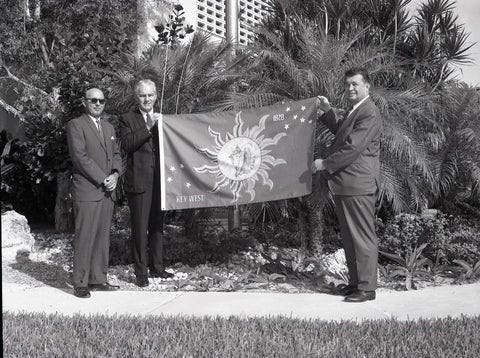
The Conch Republic never officially rejoined the United States, for what it’s worth. Technically, it remains in a state of “friendly secession.” They issue their own passports (allegedly once accepted at a border crossing, though I would not personally test this). They have a national motto: We Seceded Where Others Failed. Every April, they celebrate Conch Republic Independence Days with parades, mock naval battles in the harbor, and exactly the level of commitment to the bit that you would expect from a place that has been doing this since 1982.
I really admire the spirit and creativity in calling out your government and getting things done. Sometimes the answer isn’t to fight the system on its own terms or to quietly comply and seethe. Instead, Key West decided the answer was to make itself so spectacularly impossible to ignore that the system simply found it easier to give them what they wanted and move on.
And they got a really good story out of it.
The Conch Republic still sells commemorative passports. Their website still refers to themselves as “the Smallest, Best-Natured Nation in the World.” And Key West still stops every evening to clap for the sunset, as if to say: yes, we see it. We know. We live here on purpose.
That's the week. A half-finished office I'm already in love with, a new hobby I didn't ask for but fully endorse, a writing curriculum that is making me think harder than I expected, and the most unhinged act of civic protest I've ever had the pleasure of researching. Honestly? Not a bad Sunday Desk.
See you next Sunday.

For paying subscribers only
If you’re a paid subscriber, everything from Week One is waiting for you below — the fiction drill, the Hemingway deep dive, the newsletter rewrite, and the instructor feedback that made me rethink the whole scene. It’s the part of Sunday Desk I actually had to earn.
Not a subscriber yet? This is the work — and if you want to follow along as I work through the curriculum, this is where it lives.
