

Sunday Desk | Bagels, Bleakness, and Betty Boop
A snow day spent with French nihilism, freshly freed cartoons, and the only thing worth leaving the house for, bagels

Well, we finally got snow. About an inch, which, around here, apparently is enough to cancel everything but not enough to actually do anything with. Meanwhile, the rest of the country is getting buried, and we’re sitting in our little protective weather bubble, dodging any real disruption like it’s a superpower.
The dogs were thrilled. They spent the day darting in and out, absolutely convinced this was the most exciting development in months.
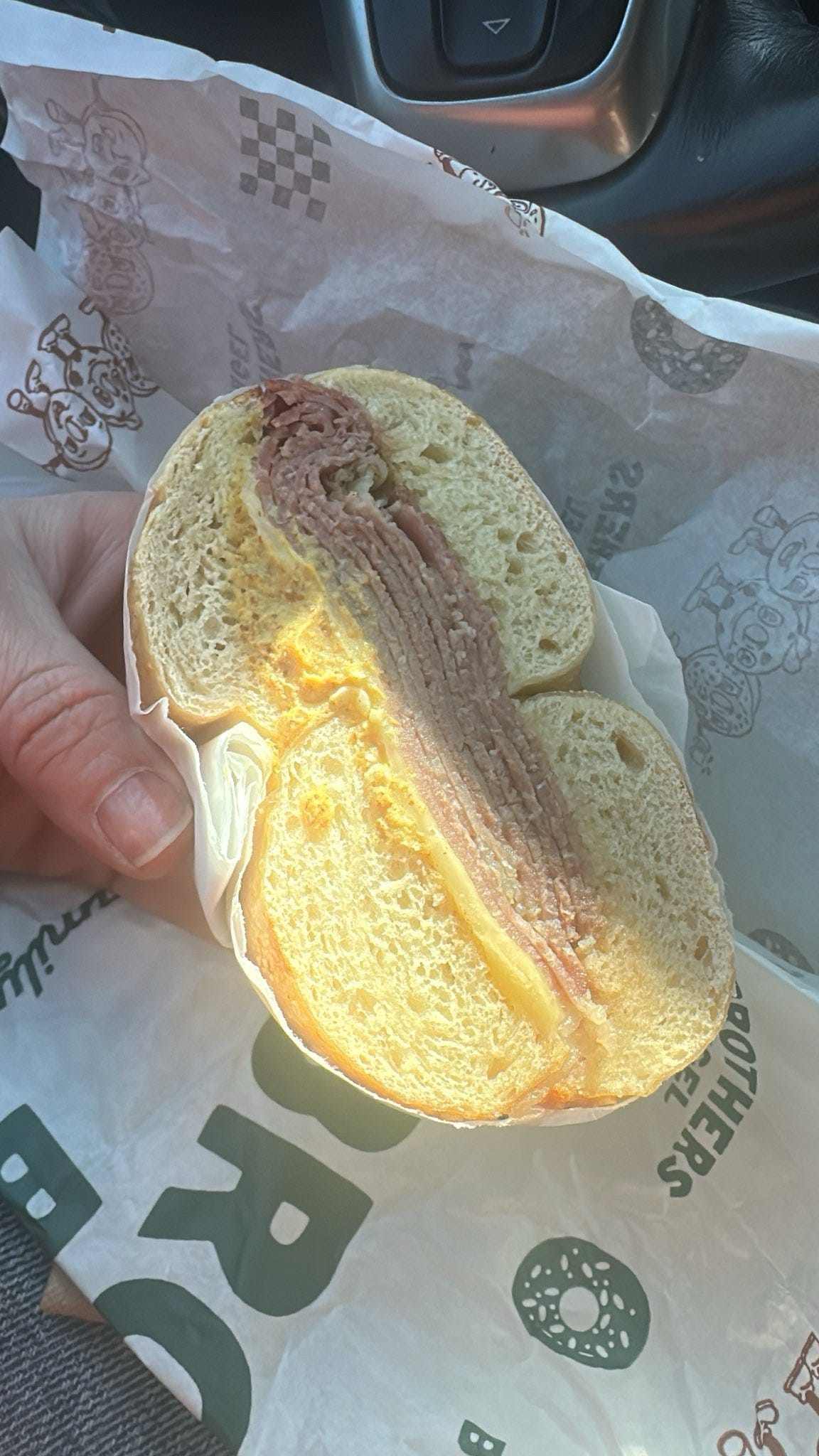
The only thing I was willing to brave the cold for? Bagels. We checked out Brother’s Bagels, a new local spot, and I’m here to report: it’s the real deal. Good bagels and good coffee, which is not always a given. I haven’t worked through the whole menu yet, but my current favorite is the Brooklyn sandwich—pastrami, Gouda, and deli mustard — I got it on a plain bagel. I also brought some bagels home, and the salt and everything are fighting for top billing.
If I have to choose between breakfast and dinner out, I will choose breakfast every single time. There are very few things I’ll leave the house for on a cold day, and a good breakfast is one of them.
The rest of the day? Fire. Warm sweater. A book. The kind of slow, cozy Saturday that reminds you winter isn’t all bad.
The Stranger, Albert Camus
I finished The Stranger this week, which is not usually a book I would pick up. But it’s short — only 124 pages — and I wanted to quickly get a book “on the board” before diving into something longer.
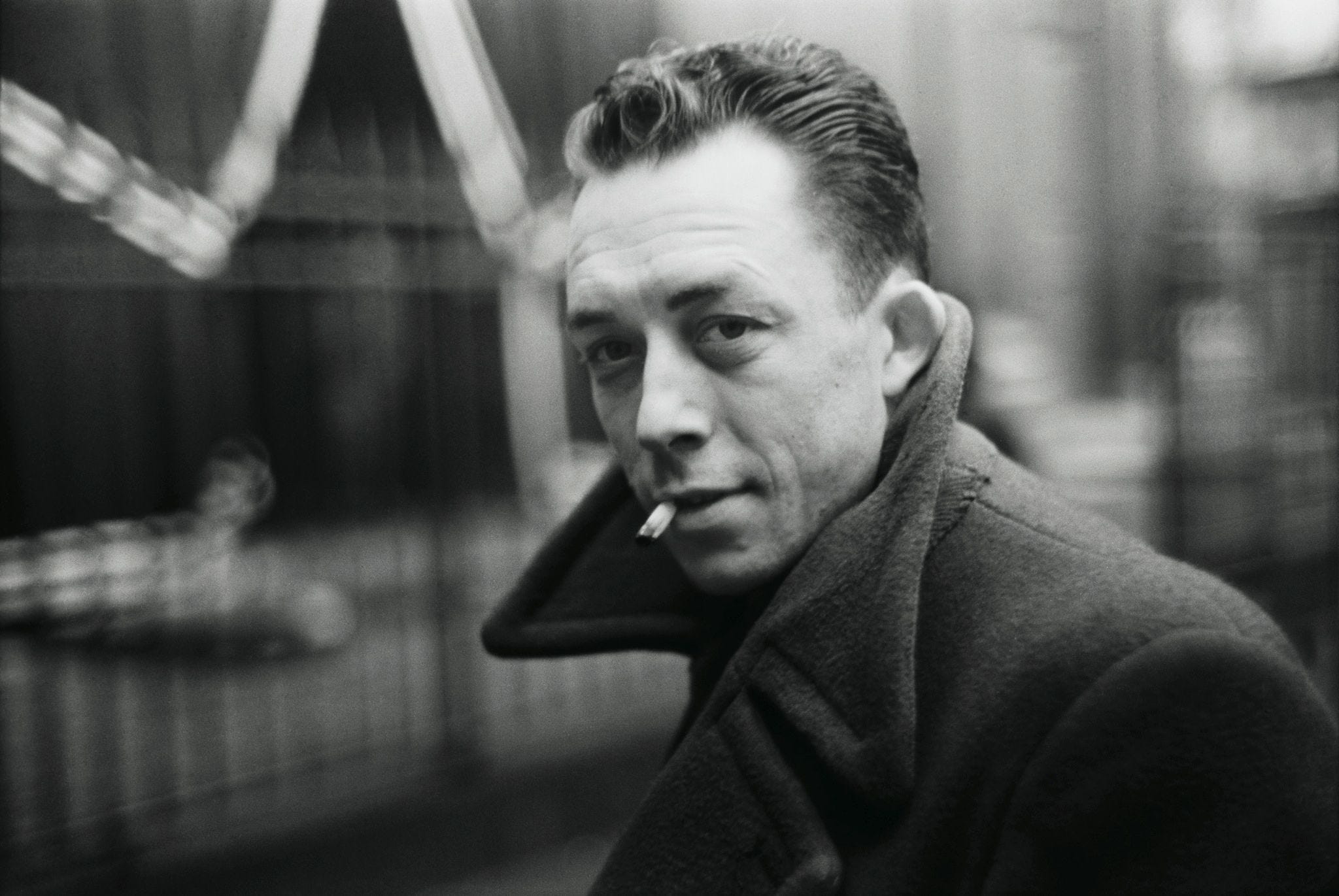
Albert Camus was a French-Algerian philosopher and novelist, born in 1913 in what was then French Algeria. He won the Nobel Prize in Literature in 1957, became one of the most influential voices of 20th-century existentialism — though he rejected that label — and died young in a car accident at 46. His philosophy centered on what he called “the absurd.” The tension between our search for meaning and a universe that offers none. I am sure he was a blast at parties.
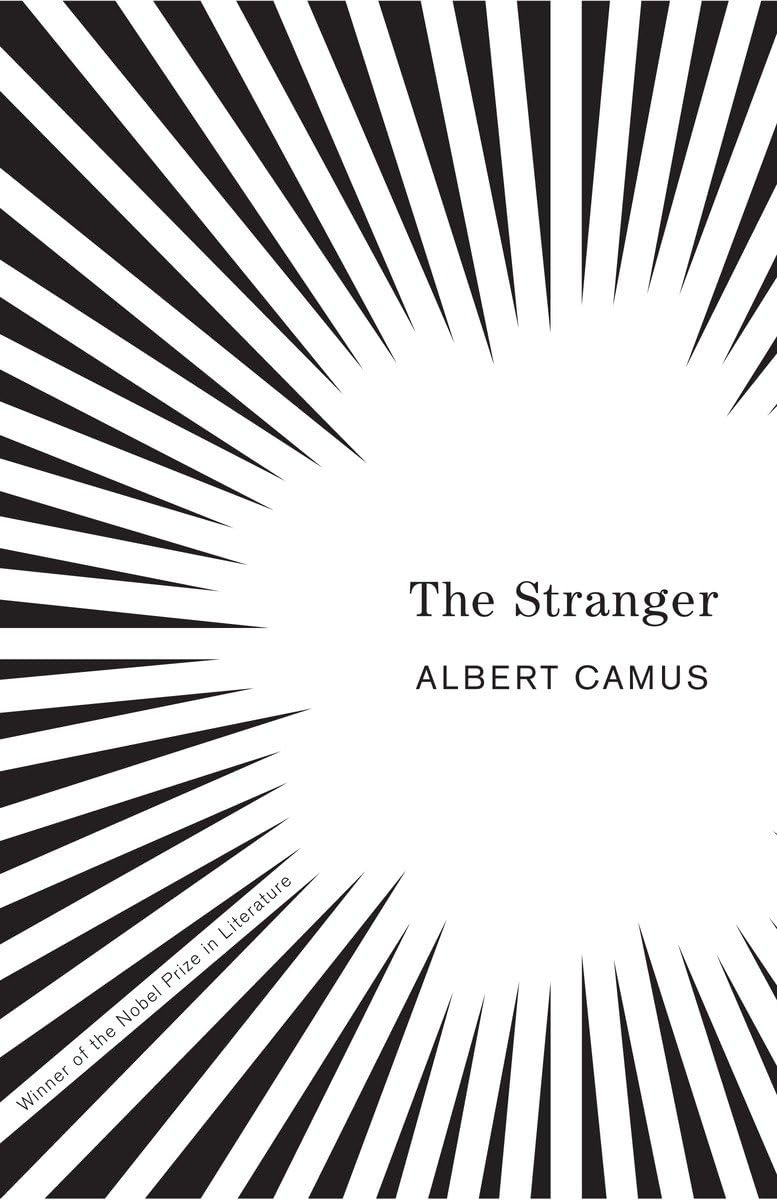
The Stranger was published in 1942, and it’s the book that made him famous. The plot is deceptively simple, Meursault, our narrator, attends his mother’s funeral, begins a relationship, gets tangled up with a neighbor’s messy domestic situation, and—without clear motive—commits a violent act that changes everything.
But what makes the book unsettling isn’t the plot or that there is a murder. It’s Meursault himself.
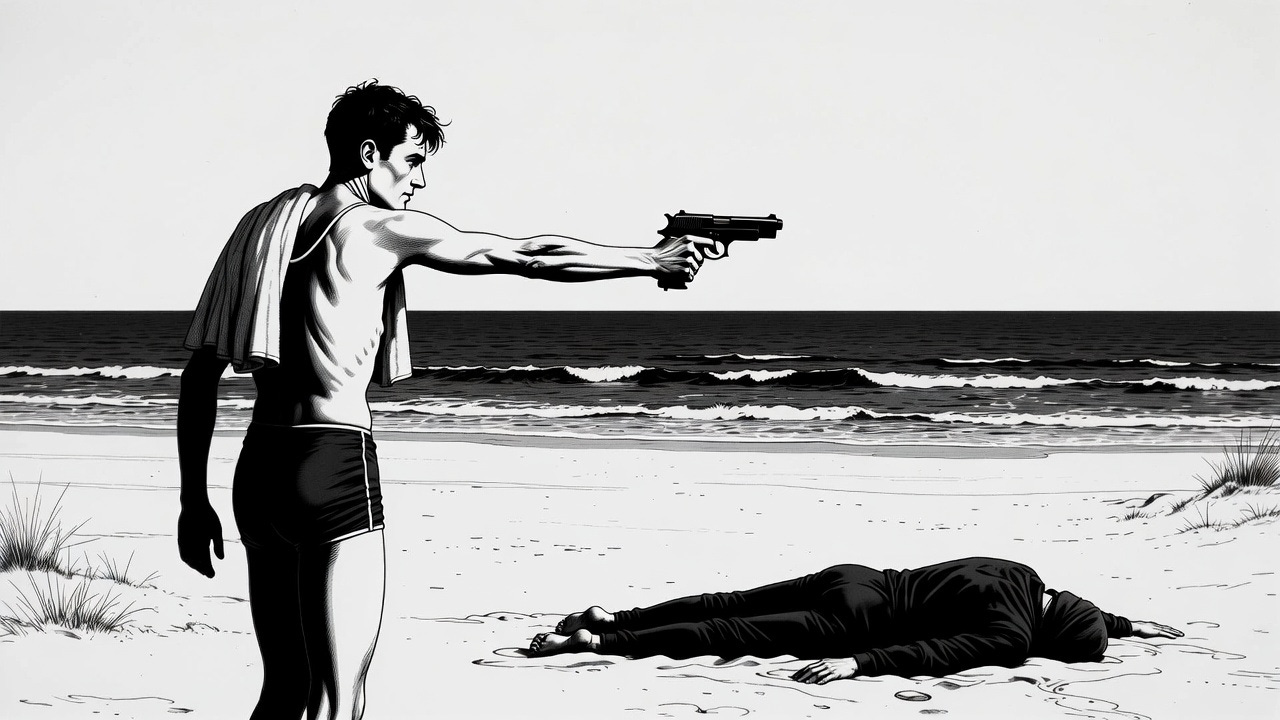
He floats through life indifferent to everything: the death of his mother, the woman who loves him, the absence of any true friends. There’s a murder—of an unnamed man who is never treated as a real person—and even that barely registers as meaningful. The only thing that seems to motivate him at all is the desires of his own flesh which are later taken from him when he is sent to prison.
An interesting detail I noticed is that Camus writes in a style that mirrors Meursault’s inner state. The first part of the book is written in short, clipped sentences, almost detached, like he’s drifting through life jumping from one action to the next with no purpose. Then, as circumstances change and he’s forced to reflect and the writing becomes more pensive, more layered. Like all he has left are his thoughts.
The consequences of Meursault finally come for him, but not because of what he did. They come because of who he is, or rather, who he isn’t. The people around him can’t stand his emotional blankness. His lack of tears, his failure to perform grief the way people expect—he doesn’t act right — that’s what condemns him. Not the facts, it’s the discomfort he causes by simply existing without the normal range of human feeling or show of emotion.
Sadness does eventually come for him. But only when he realizes how much he’s hated for the way others perceive him. And in a dark twist, he finds a kind of comfort in that hatred, because at least it means he’s not invisible. At least he’s not completely alone.
This is not a light hearted read. It’s downright depressing. Make me think Camus was depressed philosopher, and nihilistic even though reports are he hated that characterization. But it’s pretty obvious because in the end, Meursault finds relief in the declaration that there is no God and we all end up in the same place: dead.
It’s bleak. And oddly enough, I think it’s a good read for any Christian. Not because it’s anything you want to emulate, far from it. But because it provides an inside look at what an existence without God actually looks like. What it can be to be alone without the joy of God within you.
An unbeliever might read this as an affirmation, almost a resignation to what they see as the “reality of life.” Maybe even be “empowered” by it. But to me, it felt like a portrait of profound loneliness. And I felt a deep sadness for those who move through the world untethered from meaning, without the joy of God. To be so disconnected that you settle to find comfort in hatred to feel connection.
It’s sad. But it’s worth sitting with.
Next on My Reading List
I know I said this last Sunday, but I wanted to get one on the board. I didn’t realize it was going to be so depressing. Anyway, I finally got my three-in-one edition of C.S. Lewis’s Space Trilogy—Out of the Silent Planet, Perelandra, and That Hideous Strength—and after read two intense books back-to-back, I hope I’ll get through these with a little more momentum.
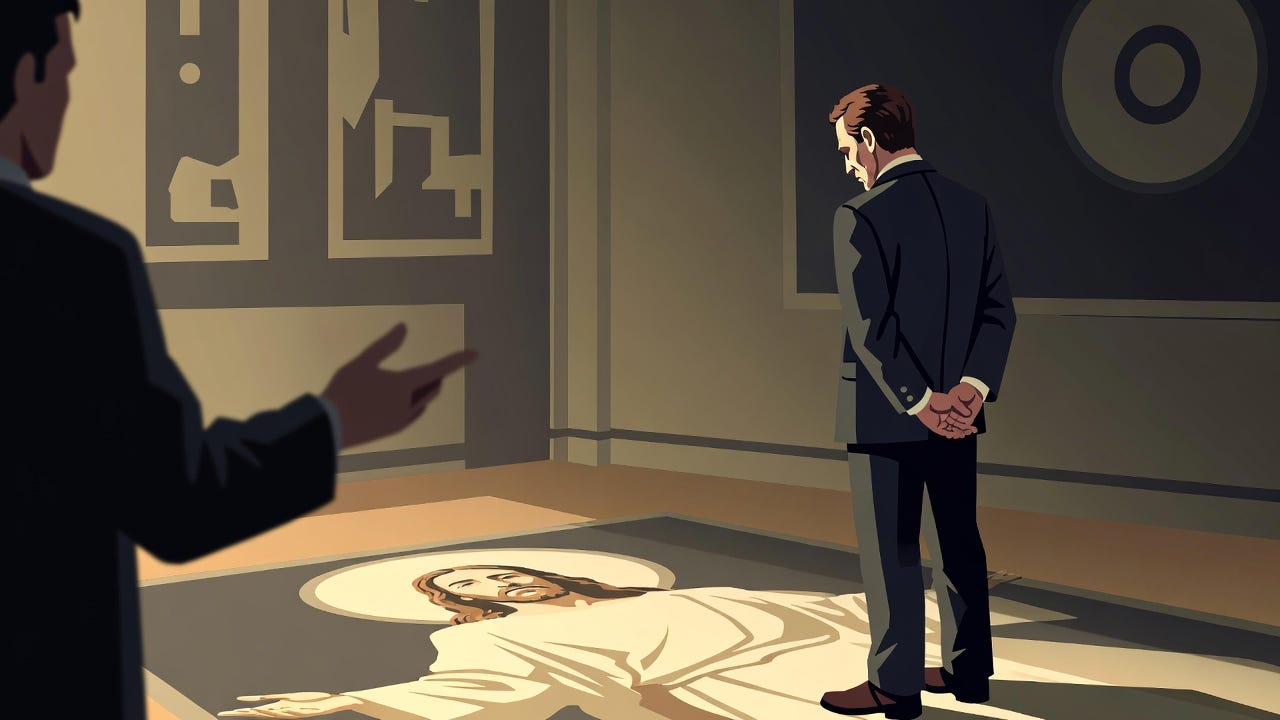
Here is a little tid-bit about me, I love a good dystopian fiction! I’ve read most of the classics: 1984, Animal Farm, Brave New World, We, Fahrenheit 451 and even The Handmaid’s Tale, . So I was very excited to discover Lewis’s dystopian trilogy. Particularly because it has a very different approach than other dystopian fiction.
Most dystopian fiction gives us the obvious villain. The mustachioed authoritarian with the big boot, the surveillance state, the overt oppression. Lewis goes a different direction. His warning isn’t about jackbooted thugs, it’s about the hubris of the sneaky intellectual. The technocrats. The planners. The people who are absolutely certain they know what’s best for the rest of us.
Given everything happening in the world right now, that feels... timely.
For Cathrine O'Hare
Welcome to the Public Domain, Class of 2026
Did you know that every January 1st, a new batch of creative works enters the public domain in the United States—copyrights expire, and suddenly anyone can use, adapt, remix, or build on these works without permission or payment.
This year’s haul? It’s a good one.
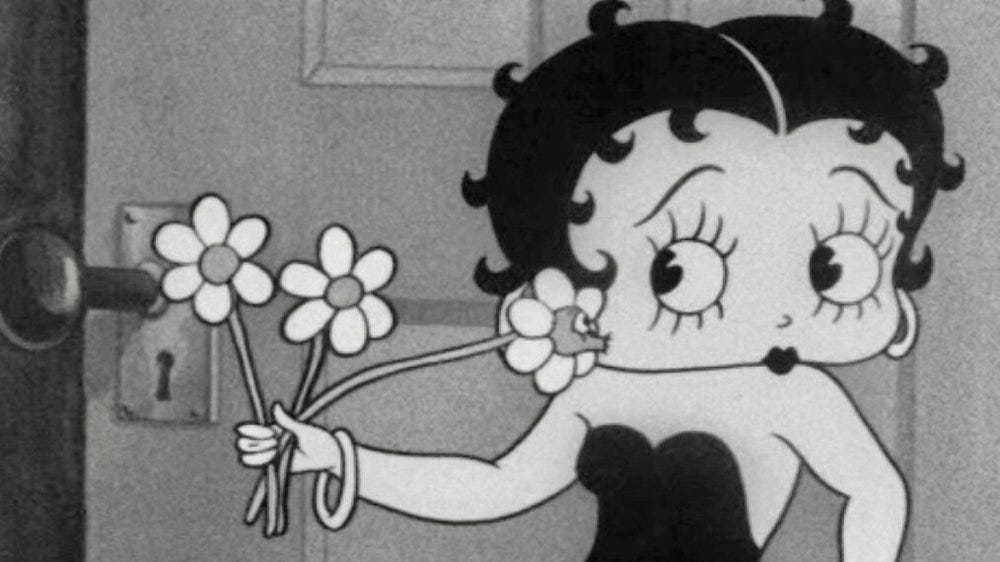
The original Betty Boop, the first four Nancy Drew books, and Greta Garbo’s first talkie are among the many works from 1930 that became free to use starting January 1st.
Literary highlights range from William Faulkner’s As I Lay Dying to Agatha Christie’s The Murder at the Vicarage (her first Miss Marple mystery) and the first four Nancy Drew novels. Also entering the public domain: Watty Piper’s The Little Engine That Could, Dashiell Hammett’s The Maltese Falcon, and music like “Georgia on My Mind,” “I Got Rhythm,” and “Dream a Little Dream of Me.”
On the film side, we get the original All Quiet on the Western Front (which won Best Picture at the 3rd Academy Awards), plus the debut of Disney’s Pluto (originally named Rover, did not know that) and Betty Boop’s first appearance in the Fleischer Studios cartoon Dizzy Dishes.
Did you know, Betty Boop started as essentially the Minnie Mouse to a popular anthropomorphic dog named Bimbo? She’s got a supporting role in Dizzy Dishes, performing a slinky song-and-dance in a tiny black dress. She’s not named, but sings “boop boop, a doop.”
Jennifer Jenkins, the director of Duke University Law School’s Center for the Study of the Public Domain, calls this “an opportunity to look back at the history of these two incredible animation studios, Fleischer and Disney, and how their styles are imprinted in the DNA of today’s cartoons.”
And because this is 2026 and nothing is sacred, a Betty Boop horror movie is already in the works, following a string of 2025 scary movies starring villainous versions of the freshly non-copyrighted Peter Pan, Bambi, and Popeye. Also, a Minnie Mouse slasher is due for release in 2026.
Of course, it’s not all horror reboots. Not all adaptations have to be dark: Think West Side Story drawn from Shakespeare’s Romeo & Juliet, Percival Everett’s reimagining of Huckleberry Finn in the 2024 book James, and the Wizard of Oz-inspired Wicked movies.
If you want to go down the rabbit hole, Duke Law has the full list: Public Domain Day 2026
On My Reading List
The Harry Potter Generation Needs to Grow Up — Louise Perry in the New York Times argues that franchises like The Lord of the Rings or The Chronicles of Narnia may rise and fall with new adaptations, “but those franchises aren’t bound to a particular generation in the way that Harry Potter is bound to the millennials.” A thoughtful piece on why some adults can’t seem to move past Hogwarts.
23 Ways You’re Already Living in the Chinese Century — Wired’s special issue explores how China is shaping the future: “The robotics explosion. The energy revolution. The cultural takeover. It’s everything you wanted for the United States—but done better in China.”
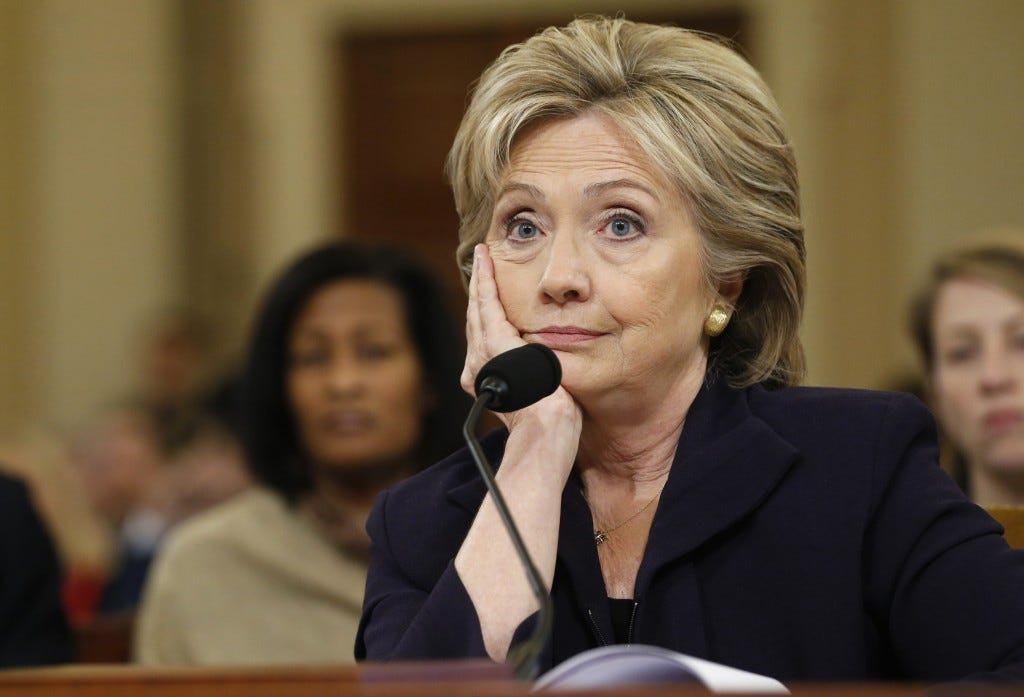
MAGA’s War on Empathy — And finally, Hillary Clinton has entered the chat. In a 6,000-word article published in The Atlantic, titled “MAGA’s War on Empathy,” Clinton argues that “compassion is weak and cruelty is strong has become an article of MAGA faith.” She takes aim at conservative Christian influencers, including Allie Beth Stuckey, whose book Toxic Empathy clearly struck a nerve.

Stuckey responded on X: “When Hillary Clinton is writing 6,000-word op-eds in the Atlantic attacking warnings against toxic empathy, you know you’re over the target. Keep. Going.”
When Hillary Clinton is writing lengthy theological critiques of your work, you’re doing something right, my friends.
That’s a Wrap
So there you have it: snow day coziness, a nihilistic French novel, public domain cartoons, and Hillary Clinton lecturing Christians about empathy. Just another week.
Whatever your week holds, I hope you find a moment to slow down. Read something that makes you think. Watch something that makes you laugh. Eat a good bagel if you can find one.
And if you’re snowed in? Stay warm. Make some stew. Maybe watch Betty Boop before Hollywood turns her into a serial killer.
See you next Sunday!

If you enjoy this slower, reflective corner of the newsletter, that’s what Sunday Desk is for.
Thank you for this. I just rediscovered you, somehow my algorithm was hiding you for a while... You're a rationale voice in a crazy time. Thank you!
That book sounds so depressing... And I have Allie Beth Stuckies pod where she talks about Hillary on my list the get to. Should be interesting. I do think we've gotten a little carried away with this "empathy" thing.