

He Wasn’t Crazy. That’s the Problem.
The man who tried to kill the President at the WHCA dinner wrote a manifesto. It’s not what you’d expect. And that’s what should worry you.

Cole Tomas Allen’s manifesto opened with apologies. Not the hit list. The apologies. To his parents for lying about an “interview.” To his students for saying he had a personal emergency. To the hotel workers who handled his luggage. To the people he traveled next to.
He closed with a jab at the Secret Service. He called them incompetent and said he hoped they’d get it together by the time the country had “competent leadership again.”
Like, if I was an Iranian agent, instead of an American citizen, I could have brought a damn Ma Deuce in here and no one would have noticed shit.
Actually insane.

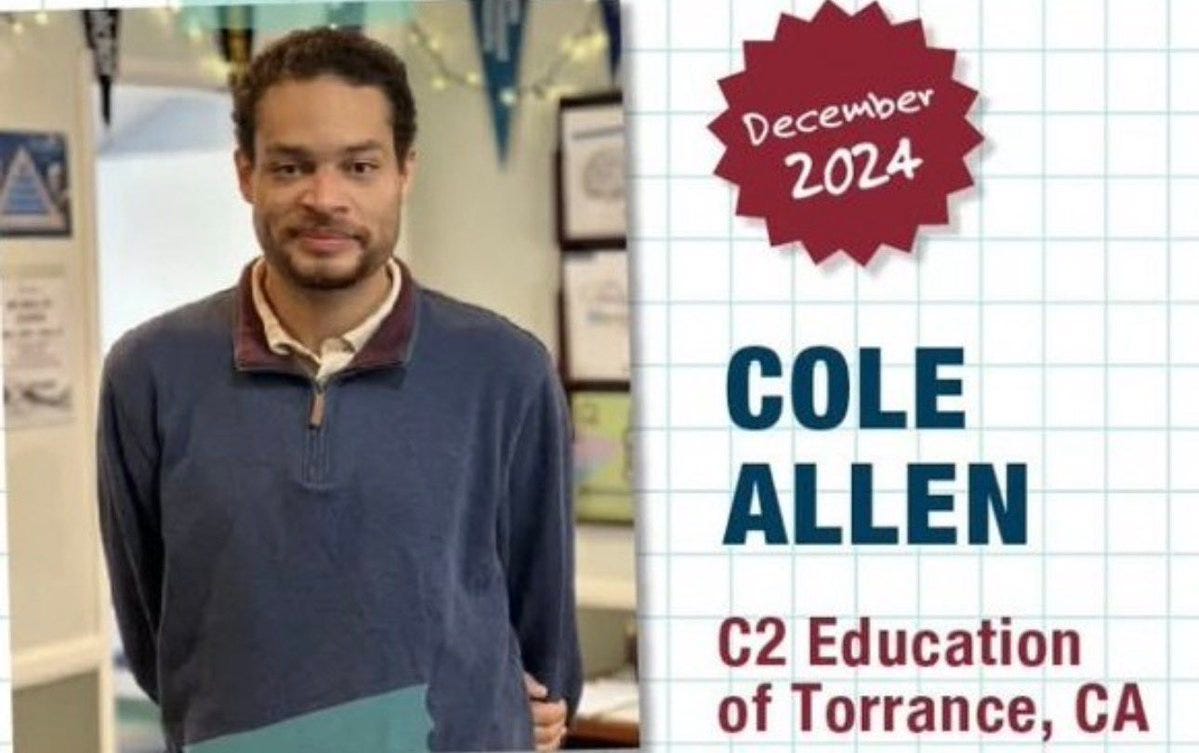
When something like this happens, the image that forms in your head is a radicalized, blue-haired ANTIFA type screaming through a megaphone. That’s not Allen. He graduated from Caltech in 2017 with a mechanical engineering degree and picked up a master’s in computer science from Cal State Dominguez Hills last year. A high school teammate called him “borderline genius” and “super stable.” A college professor described him as soft-spoken and polite, the kid who sat in the front row. He was named Teacher of the Month for December 2024 at C2 Education, where he worked part-time.
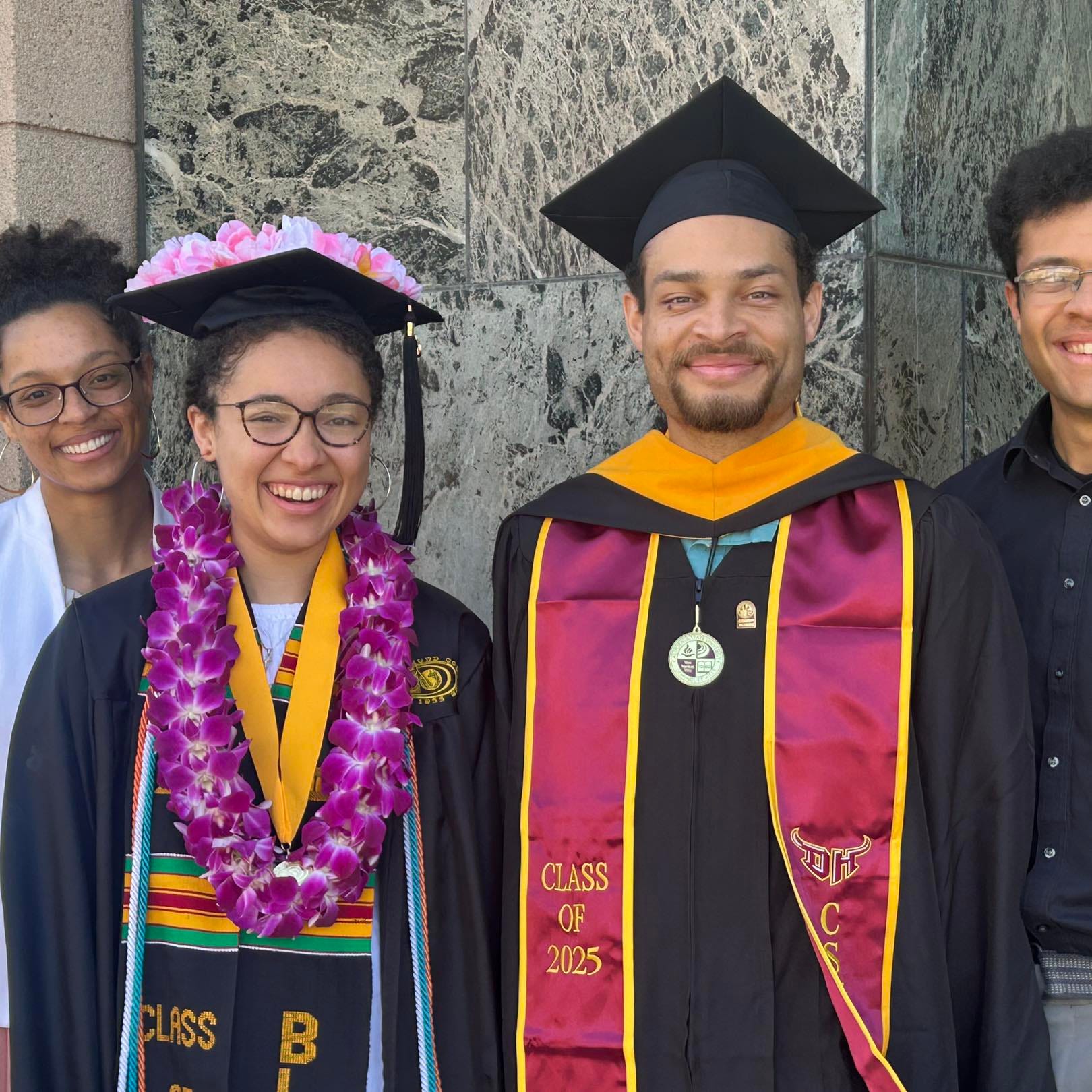
He was also, by his own LinkedIn profile, a member of the Caltech Christian Fellowship.
The media and the President have described the manifesto as anti-Christian. After reading it, I’d argue the opposite. Allen didn’t reject his faith to do this. He recruited it. He leaned on the same narratives that the left and Democrat politicians have been repeating for years.
The Reasoning
The first thing that hits you about this manifesto is that it’s structured and measured. The “manifesto” is a series of objections and rebuttals, the way you’d format a debate brief. He considered what people would say to talk him out of it, and then he answered.
Objection 1: As a Christian, you should turn the other cheek.
Rebuttal: Turning the other cheek is for when you yourself are oppressed. I’m not the person raped in a detention camp. I’m not the fisherman executed without trial. I’m not a schoolkid blown up or a child starved or a teenage girl abused by the many criminals in this administration.
Turning the other cheek when someone else is oppressed is not Christian behavior; it is complicity in the oppressor’s crimes.
If they sound familiar, these are the talking points you’ve heard on every cable panel and in every viral thread for the past year, treated as established fact.
Objection 5: Yield unto Caesar what is Caesar’s.
Rebuttal: The United States of America are ruled by the law, not by any one or several people. In so far as representatives and judges do not follow the law, no one is required to yield them anything so unlawfully ordered.
Convenient, that did the work to give himself permission.
His targets were ranked by seniority. Administration officials first, highest to lowest. Secret Service only if necessary, and only with non-lethal force if possible. Hotel staff and guests not at all. He’d use buckshot rather than slugs to minimize collateral damage. He even noted, almost apologetically, that he’d go through anyone in his way to reach the targets, on the grounds that anyone who chose to attend a speech by a “pedophile, rapist, and traitor” was complicit.
That’s the line that should stop you. Complicit because they chose to attend. Categorical guilt by association. Once you accept that frame, there’s no innocent person left in the room.
He reasoned his way there.
Where Does Someone Learn To Think Like This?
You don’t have to draw a straight line from any single pundit to Allen. You can’t, and you don’t need to. What you can do is name the pattern.

“I would never, but I understand why.” Hasan Piker said something similar about Luigi Mangione. Mainstream Democrats have been echoing subtler versions of it for years now. The online left treats the moral question of political violence as a sliding scale. It depends on who, it depends on why, it depends on how “evil” they are. Not the line it used to be.
The game goes like this. “I would never” keeps the speaker’s hands clean. I “understand why” hands the listener a permission slip.
Allen took the permission slip and ran with it. A podcast host didn’t need to tell him to do it. He needed a culture that told him a thoughtful, churchgoing, soft-spoken guy in the front row of his classes could do it and still be the same guy. The right circumstances make it morally acceptable. The rhetoric has done that work. It creates the permission structure. It makes it morally acceptable. It doesn’t matter if the person saying it means it literally. What matters is that someone, somewhere, is going to
His sister knew. She’d told family members he had a tendency to make radical statements, and he kept referencing a plan to do “something” to fix the world. He sent his writings to his family about ten minutes before the attack. One of them called the police.
The Cover, Not the Faith
Allen’s logic isn’t Christian. It’s a counterfeit wearing Christian language as a skinsuit.
Real Christianity teaches the opposite of his manifesto. Turn the other cheek isn’t an asterisk for political violence. “ Love your enemies” isn’t a suggestion with carve-outs. “Vengeance is mine, sayeth the Lord”, is unambiguous about who’s authorized to deal it out, and it isn’t a 31-year-old with a shotgun who decided his fellow citizens were complicit. Allen didn’t reach his conclusion by reading his Bible. He reached it by imbibing a political worldview and then decorating it with scripture.
This counterfeit skinsuit-wearing Christianity is everywhere now, and it crosses partisan lines.

Tucker Carlson runs a version of it. He’ll post that “Muslims love Jesus” and simp for Islam in ways that would have gotten him laughed off the air ten years ago. He’s treating Christianity less as a faith with content and more as a tribal identity that can be flexibly redefined to fit whatever argument he’s making this week. That’s not Christianity. That’s a man using Christianity as set dressing.

The progressive-activist version is more sinister. People who are not believers deploy a self-interpreted Christianity as a rhetorical weapon, almost exclusively against conservative Christians. Jesus was a refugee. Jesus was a socialist. Jesus would have wanted conveniently whatever they want. Stolen-valor Christianity from people who have never set foot in a pew on a Sunday, lecturing actual Christians about what Jesus would have wanted.
When a misguided believer marinates in that culture long enough, surrounded by people calling his political opponents fascists, traitors, criminals, using moral language stripped of any moral foundation, eventually some of them will start to think the cover story is the real thing. They’ll act against their own faith and call it Christianity.
Over the last few years, the verbal barbs have crossed the spectrum. The bullets don't. Charlie Kirk was murdered. President Trump has survived three assassination attempts and a string of thwarted plots. The pattern isn't symmetrical, and pretending it is has become its own kind of dishonesty.
The same people who have spent years warning about Christian Nationalism as the rising domestic threat just produced a Christian assassin who did it for them. They will pretend not to notice. They will probably try to make his Christianity the problem.
It isn’t. The problem is what they handed him to call Christianity in the first place.
The Quiet Version
A shooter is the worst version of what we are experiencing, but it is also happening at dinner tables.
These new permission structures not only produce gunmen. They produce a country that’s slowly forgotten how to be one country. Estranged siblings. Parents who haven’t spoken to a kid in two years. Friendships that ended over an election. Churches that split. Holiday tables with empty chairs that didn’t used to be empty.
That is the byproduct. The shooter simply has our attention, but the fractures are a collective story.
Cole Allen thanked his church family in his goodbye letter. He apologized to his students. He used buckshot to minimize the harm to people he didn’t intend to kill. He thought he was the good guy. Of course, he was a Christian.
People who do terrible things while believing they’re the good guy don’t get there on their own. They get there because somebody, a lot of somebodies, keep moving the line and telling them the line had always been there.

as someone whose family has an empty chair during the holidays, this situation hits home.
This was well written. This really hits home as he was, at least formerly, a member of a conservative, reformed church closely associated with mine. Makes me feel a little sick.